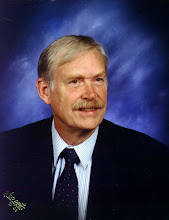
Recently, AML wrote a comment about my “Onalaska” post:
AML wrote...
Every tree has a life to give and has a reason to leave. So planting more trees will help make the world green and wonderfull.
Few would want to argue with AML, and as I worked on the story that was eventually used in part by the author of “Onalaska,” I thought many times about the mighty and beautiful trees that were killed off so that his country might have houses and baseball bats and pianos, and whatever else entrepreneurs might use to create jobs and produce things that people wanted and needed.
And I also thought about the title of this blog, “Planting Trees.” I called it that not because I was thinking of elms and maples and cherry blossoms, but because I was thinking of putting ideas into the heads of young people. My trees were a metaphor for giant redwoods and palms and walnut trees--big ideas in the minds of our next generation.
After I retired from industry, I really went to work. I went to the local school district and said, “I want to be a substitute teacher.” I had two college degrees but they still made me take a test for aspiring teachers. It was absurdly easy, and after the local police checked me out, I found myself in a classroom.
Standing in front of 35 kids every day from seventh grade to high school age kids, I found that I had a very high office. Yes, I had taught three semesters of a management course in college, but I did not like doing it. About half of my students were graduate students and half were undergraduate students. The experience was kind of frustrating for me.
But when I found myself in front of an algebra class, or a science class in public school, I was really at home for two reasons. One reason had to do with Democracy. Public schools are where Democracy is ingrained into the minds of our young people. I supported it every way I could. Sometimes this meant protecting possible gay children and always it meant protecting small girls from being trampled by big boys. It often meant discouraging rumors and false stories about one race being superior to another. It meant telling girls that they could do math just as well as boys (which is absolutely true).
It never occurred to me to present just one side of a story, no matter what I personally felt. I might miss some “trees” that way.
The second reason I felt at home is that I was able to plant other trees. When there were breaks in a lesson, I told funny stories about my own family life when I was a kid with two older, meaner brothers. My own children were grown, so I talked about them and their injuries. These tales reinforced the idea of a strong family which protected its members and shared its sorrows as well as its joys. These were “trees” also.
Planting trees in public schools this way allowed me to explain science and math in new ways as well as telling true stories about our country’s history that reinforced the American culture.
The kids asked for copies of my stories so I wrote first one book and then nine more. Parents asked for me when they found that a teacher was going to be absent, and asked for me to tutor their kids. I didn’t need the money and my health was failing, so I had to slow down over time and then finally quit altogether.
During this time and even after I came to believe that it would serve the students and teachers well if more older people volunteered to be substitute teachers. Older citizens had something important to say about what they had observed over the years.
As for me, I knew that teaching was one of the most important jobs I ever had. I was allowed to plant many trees for about five or six years. Fortunately, I was teaching in one of the best schools in one of the best school districts of the state of California. It was an honor to be included as a teacher with the REAL teachers in that district who were full time professionals.
I retired from a job in industry where I managed the people who managed divisions of manufacturing companies. I was, by all accounts a professional manager. And yet, nothing was as fulfilling as those years I was allowed to stand in front of a classroom of kids from all over the world and plant American trees along with Algebra, Science, and Social Studies.
So yes, AML, planting more trees will help make the world green and wonderful.
Showing posts with label industry. Show all posts
Showing posts with label industry. Show all posts
Thursday, March 08, 2012


Sunday, May 09, 2010
Make Way for a Mensch
Often I write about how we are pieces of a movement that enriches the world. It’s the ‘Merican way. If you do your genealogy, you know that. Many Americans have enriched the world through medical research, industrial research and computer research among other ways. What do I mean?
Well, ours is the country large enough and free enough to conduct a medical business that has money left over, a surplus, with which to invent new medicines and machines that will help people get well. Other countries have medical systems that are dominated by government. Their government has taken away all incentives to produce new medicines and machines. They rely on the
My own background is in industry. I cannot tell you because I do not remember how many of my inventions and methods were used to manufacture devices in a less costly manner so that poor people could afford them. Most of these devices were useful in removing dirt and germs, so people lived better. And they had jobs they could depend on.
Of course, the computer industry revitalized our economy in the 1980’s. Not only did we get a useful product, the computer, but also we got a lot of jobs for people. Wealth was created. We were free enough to evolve an entirely new industry the rest of the world did not have. So we all have benefited .
Who was the guy that invented the computer hard drive? I don’t know. But I know he was a piece of the pattern that produced fast, long-lasting computer machines. And that is about all we can hope for—to be a piece of the pattern. Just as our forefathers and mothers were part of the pattern, adding a nip here and a tuck there in the human quilt, voting for the kind of place they wanted their children to grow up in.
Yesterday, I got word that my brother-in-law died. He had been a professor of some arcane subject in the mechanical engineering school of a large state university. Using his knowledge he developed tomorrow’s inventors. He also came up with some pretty good ideas, himself. But he had another attribute. He was a mensch.
Ordinarily, I do not like to use foreign words when I write. I love the English language (which is about 59% Latin). But we don’t have the word for everything. A mensch, if you don’t know, is Yiddish for
“Someone to admire and emulate, someone of noble character. The key to being “a real mensch” is nothing less than character, rectitude, dignity, a sense of what is right, responsible, decorous.”
(I found this definition on an interesting blog: http://blog.guykawasaki.com/2006/02/how_to_be_a_men.html#ixzz0nNsQo1TS)
It was wonderful to have such a man in the family: quiet, unassuming and brilliant. He wasn’t a mensch because he was a professor. He was a mensch because of his life pattern of conduct. The fact that he was interested in genealogy, the fact that he was a very good pianist and the fact that he was a fine Christian person had nothing to do with his mensch-ness. That was because he chose to live a certain way and he stuck with it.
His name was David Shippy, PhD. He was called professor but his real occupation was to contribute to society and his country in a positive way for as long as he could. In that occupation he was successful. His two children are contributors as well. An attitude like Dave’s is contagious. We’ll probably never know how large his contribution was, but you can bet it was big and red and fit extremely well in the fabric of our social well-being. And it will last for a long time. But you have to stand back to see it. The whole thing has been growing for over two hundred and thirty years.
Subscribe to:
Posts (Atom)