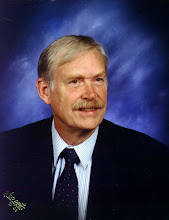
Recently, AML wrote a comment about my “Onalaska” post:
AML wrote...
Every tree has a life to give and has a reason to leave. So planting more trees will help make the world green and wonderfull.
Few would want to argue with AML, and as I worked on the story that was eventually used in part by the author of “Onalaska,” I thought many times about the mighty and beautiful trees that were killed off so that his country might have houses and baseball bats and pianos, and whatever else entrepreneurs might use to create jobs and produce things that people wanted and needed.
And I also thought about the title of this blog, “Planting Trees.” I called it that not because I was thinking of elms and maples and cherry blossoms, but because I was thinking of putting ideas into the heads of young people. My trees were a metaphor for giant redwoods and palms and walnut trees--big ideas in the minds of our next generation.
After I retired from industry, I really went to work. I went to the local school district and said, “I want to be a substitute teacher.” I had two college degrees but they still made me take a test for aspiring teachers. It was absurdly easy, and after the local police checked me out, I found myself in a classroom.
Standing in front of 35 kids every day from seventh grade to high school age kids, I found that I had a very high office. Yes, I had taught three semesters of a management course in college, but I did not like doing it. About half of my students were graduate students and half were undergraduate students. The experience was kind of frustrating for me.
But when I found myself in front of an algebra class, or a science class in public school, I was really at home for two reasons. One reason had to do with Democracy. Public schools are where Democracy is ingrained into the minds of our young people. I supported it every way I could. Sometimes this meant protecting possible gay children and always it meant protecting small girls from being trampled by big boys. It often meant discouraging rumors and false stories about one race being superior to another. It meant telling girls that they could do math just as well as boys (which is absolutely true).
It never occurred to me to present just one side of a story, no matter what I personally felt. I might miss some “trees” that way.
The second reason I felt at home is that I was able to plant other trees. When there were breaks in a lesson, I told funny stories about my own family life when I was a kid with two older, meaner brothers. My own children were grown, so I talked about them and their injuries. These tales reinforced the idea of a strong family which protected its members and shared its sorrows as well as its joys. These were “trees” also.
Planting trees in public schools this way allowed me to explain science and math in new ways as well as telling true stories about our country’s history that reinforced the American culture.
The kids asked for copies of my stories so I wrote first one book and then nine more. Parents asked for me when they found that a teacher was going to be absent, and asked for me to tutor their kids. I didn’t need the money and my health was failing, so I had to slow down over time and then finally quit altogether.
During this time and even after I came to believe that it would serve the students and teachers well if more older people volunteered to be substitute teachers. Older citizens had something important to say about what they had observed over the years.
As for me, I knew that teaching was one of the most important jobs I ever had. I was allowed to plant many trees for about five or six years. Fortunately, I was teaching in one of the best schools in one of the best school districts of the state of California. It was an honor to be included as a teacher with the REAL teachers in that district who were full time professionals.
I retired from a job in industry where I managed the people who managed divisions of manufacturing companies. I was, by all accounts a professional manager. And yet, nothing was as fulfilling as those years I was allowed to stand in front of a classroom of kids from all over the world and plant American trees along with Algebra, Science, and Social Studies.
So yes, AML, planting more trees will help make the world green and wonderful.
Showing posts with label Onalaska. Show all posts
Showing posts with label Onalaska. Show all posts
Thursday, March 08, 2012


Wednesday, August 24, 2011
The Book I Did Not Write

It must have been four years ago when I got an email from a guy named Vic. He was researching a story about the lumber industry in the Midwest to the Far West. In doing so he came across one of my family lines and then my name as a submitter of the information.
Vic introduced himself and then began asking questions. It was then that I had to ask myself a question: was I going to write a book about these cousins or not? If not, would I object to letting someone else write their story?
So I didn’t respond to Vic right away. I thought it over for several weeks (while I worked on another book) and then decided to let Vic use my information.
At first, I sent Vic what only he asked for. Then I asked if he knew some strange stories of the deaths of several of my people. He didn’t, so I sent the details and photographs. This led to other questions and materials flying back and forth across the Internet and soon I was learning things about my family. Then I began to look forward to Vic’s emails. I dug deeper into my own piles of papers for him. And then came the announcement: the book was finished. I would be getting a copy in a week or so.
For me, it all began with the murder of my great-grandfather in 1874. I wrote about him and the cowardly backshooting by the KKK in those ugly days after the Civil War. I followed the family afterwards because witnesses against the Klan did not live long and I wanted to see what had happened to them. Three brothers disappeared completely. One had been killed and the other two may have fled to what is now Panama.
A fourth brother, Tom Walker, testified and then fled out west. He had been a shopkeeper at home but out west he started stores and banks to serve settlers in Kansas and Missouri. He died in 1931 as a very wealthy man. His family line ran out in 1967 when his only grandson, a gay man, died young of cancer. It was Tom’s family’s epic tale that I wanted to write about.
It seems Tom Walker had a daughter who married a wealthy young man named Bill Carlisle. The Carlisle family was very big nationally in the lumber industry. The new family soon produced two sons. Tommy was killed by a drunk driver in 1937. The driver died in a mysterious fire soon after. Money from both sides of the family ended up in the hands of Tom Walker’s other grandson, Bill Carlisle.
Bill was very interested in the Metropolitan Opera in New York City, and not the lumber industry. He and his partner would go to New York and would throw parties for the artsy folks. I have a letter at the time of his death that said, “Bill has died. I notified the Roosevelts, Andre Kostelanitz, Rosa Ponselle . . . (and other luminaries of the social set in the 1960’s).” Bill’s partner lives within thirty miles of me at Laguna Beach as I write this, but is very reclusive and will not talk to me.
So Vic wrote a very interesting book about the lumber industry and the people who founded it using most of his own enormous research, but he flavored his interesting work with materials I had sent him. After reading the book, I found I was glad that I had done my family history, glad that it had been useful to someone else, and glad that I had placed their names on the Internet.
Vic is a good, interesting writer. He has the knack of making a well-documented history seem like a novel. Ken Burns, Dayton Duncan and others whose historical works appeared on PBS have that same ability. They are inventing a new genre which fits genealogists needs very nicely.
The name of the book is Onalaska and the author’s full name is Victor J. Kucera. I recommend it as an interesting book by itself, but also as an example of how you can organize and present that genealogy you have in the back of your head. The book has 340 pages plus an appendix, end notes, time line and an index. It will be available in early 2012.
Onalaska is a book I did not write. But I wish I had. I would say more about it but I just discovered a letter my grandmother wrote to Tommy’s mother after the car crash in 1937. Maybe I can get it to Vic so he can include it in the final edition.
One more thing: you just don’t know when the material you collected is going to be useful to you or to someone else. That is why it is worth the effort to be the “expert” on your family and to have the information handy. And it is useful to let someone on the Internet know that you have it.
Subscribe to:
Posts (Atom)