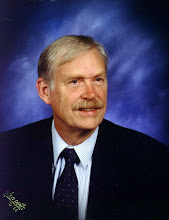
Recently, AML wrote a comment about my “Onalaska” post:
AML wrote...
Every tree has a life to give and has a reason to leave. So planting more trees will help make the world green and wonderfull.
Few would want to argue with AML, and as I worked on the story that was eventually used in part by the author of “Onalaska,” I thought many times about the mighty and beautiful trees that were killed off so that his country might have houses and baseball bats and pianos, and whatever else entrepreneurs might use to create jobs and produce things that people wanted and needed.
And I also thought about the title of this blog, “Planting Trees.” I called it that not because I was thinking of elms and maples and cherry blossoms, but because I was thinking of putting ideas into the heads of young people. My trees were a metaphor for giant redwoods and palms and walnut trees--big ideas in the minds of our next generation.
After I retired from industry, I really went to work. I went to the local school district and said, “I want to be a substitute teacher.” I had two college degrees but they still made me take a test for aspiring teachers. It was absurdly easy, and after the local police checked me out, I found myself in a classroom.
Standing in front of 35 kids every day from seventh grade to high school age kids, I found that I had a very high office. Yes, I had taught three semesters of a management course in college, but I did not like doing it. About half of my students were graduate students and half were undergraduate students. The experience was kind of frustrating for me.
But when I found myself in front of an algebra class, or a science class in public school, I was really at home for two reasons. One reason had to do with Democracy. Public schools are where Democracy is ingrained into the minds of our young people. I supported it every way I could. Sometimes this meant protecting possible gay children and always it meant protecting small girls from being trampled by big boys. It often meant discouraging rumors and false stories about one race being superior to another. It meant telling girls that they could do math just as well as boys (which is absolutely true).
It never occurred to me to present just one side of a story, no matter what I personally felt. I might miss some “trees” that way.
The second reason I felt at home is that I was able to plant other trees. When there were breaks in a lesson, I told funny stories about my own family life when I was a kid with two older, meaner brothers. My own children were grown, so I talked about them and their injuries. These tales reinforced the idea of a strong family which protected its members and shared its sorrows as well as its joys. These were “trees” also.
Planting trees in public schools this way allowed me to explain science and math in new ways as well as telling true stories about our country’s history that reinforced the American culture.
The kids asked for copies of my stories so I wrote first one book and then nine more. Parents asked for me when they found that a teacher was going to be absent, and asked for me to tutor their kids. I didn’t need the money and my health was failing, so I had to slow down over time and then finally quit altogether.
During this time and even after I came to believe that it would serve the students and teachers well if more older people volunteered to be substitute teachers. Older citizens had something important to say about what they had observed over the years.
As for me, I knew that teaching was one of the most important jobs I ever had. I was allowed to plant many trees for about five or six years. Fortunately, I was teaching in one of the best schools in one of the best school districts of the state of California. It was an honor to be included as a teacher with the REAL teachers in that district who were full time professionals.
I retired from a job in industry where I managed the people who managed divisions of manufacturing companies. I was, by all accounts a professional manager. And yet, nothing was as fulfilling as those years I was allowed to stand in front of a classroom of kids from all over the world and plant American trees along with Algebra, Science, and Social Studies.
So yes, AML, planting more trees will help make the world green and wonderful.
Showing posts with label California History. Show all posts
Showing posts with label California History. Show all posts
Thursday, March 08, 2012


Saturday, March 27, 2010
Hamburgers and Spies
Often, I write posts for another blog. It belongs to the well-known genealogist Leland Meitzler, and its url is http://www.genealogyblog.com/ Here is one of my favorites that I wrote in January.
Cold Case Ancestors and Spies
It’s not that I have given up on Genealogy. It’s just that all the easy stuff has come to light. Now I am down to searching through Bavarian files from the 1800’s and early American files from the 1800’s. Not as much fun as it used to be. And the “oh, ho” remarks are sounding more and more like “oy,vey.” After all, I have been at it since I broke 100% of my legs about 1990. That’s about 20 years.
Yes, I know many of you readers have been at it much longer than twenty years, and I have taken advantage of the Internet during my twenty years. But you know what I mean: the easy data come first and then you run out of easy data unless you hail from a series of large families (another of Fiske’s maxims is that large families produce more genealogists than small families, making research come much more easily).
As I sat back to write this year’s Christmas letter to friends (Evie insists on doing a letter for family members) I gave a thought to bragging points. It wasn’t long before I realized I was at an age when the length of a surgery scar was more important than the length of a holiday trip. But I could talk about my new book, Ploughshares into Swords, which was selling a few copies; I could mention my wild run-in with the CIA having to do with my tenth book; and there were two huge breakthroughs in my genealogy studies.
Nobody much cares about somebody else’s genealogy, though. Unless it involves historical figures. And part of mine was historical, in a way. I had put away my folder on one of the members of the Lewis and Clark Expedition. This “cold case” was Sgt. Nathaniel Hale Pryor, who supposedly had a son, also named Nathaniel, born in Louisville, KY about 1806. (My mother was a Pryor, who was born near Louisville in 1902, so I always had an interest in this family.) Senior was definitely historical and Junior Pryor was instrumental in making sure California went to the United States when Mexico lost its hold, so I think he was also an historical figure.
This is the year (2009) in which I found that Junior was a son of Senior and that both Junior and Senior have descendants who are alive and kicking as this is being written. Some of Junior’s descendants are actually grateful for my work in proving their relation to Senior, but it doesn’t do much good. Actual proof of Senior’s ancestry goes back a generation or two in early Virginia. Then it seems to fade away, although I think I know where it goes after that.
The important thing to me is that those Pryors were Americans-- not original settlers perhaps, but very early, anyway. Weren’t there already English people in Virginia when the Mayflower landed in Plymouth, MA, in 1620? I personally have seen Plymouth Rock and I am no more proud of it than I am those kinder shores in V irginia upstream from where George Washington’s family arrived years later.
Being American is what counts, regardless of the year of entry to our country.
I said there were two big breakthroughs this year. The Pryors were the first. What was the second? Well, my Bavarian great-grandfather Adam had two families. His wife died in the 1860’s in Louisville, leaving him with four small children. One of them died and he farmed out the rest. But I didn’t know that. All I knew was that the first set of kids disappeared from all records before 1870. I spent many years looking for those youngsters. Finding all of Adam’s second family had been a chore (and that’s my group), so I closed and put away the folder on his first family several years ago. They became another cold case.
Then, about September, a descendant of a kid in the first family sent me an email. Despite all I could do to discourage him, this young man proved he was indeed my cousin. We shared Adam as an ancestor, but not Adam’s wife. Cheerfully and gratefully, I shared what I knew about Adam. He came from Bavaria, he said, and that is I all I know about the guy. Oh, a good guess is that he lived in the Pfalz area , but that really is all I know.
So I have learned three things in 2009. Two are specific items about my family members and the third is that there are no such things as truly cold cases.
One more thing—when I meet certain people in a restaurant to get background material for my next book, I am taking a camera. I hate being spied on.
Subscribe to:
Posts (Atom)