After at least four years of research and writing, I completed a book about President Kennedy’s joke on the US people. He truly did send a space medicine scientist, one of the few the US had, to the USSR to help keep their cosmonauts alive. JFK did not live long afterwards, but Presidents Johnson and Nixon carried on the program. Apparently, they did not tell Congress.
Premier Khrushchev of the USSR had to be in agreement, of course. He was ousted in 1964, so Premier Brezhnev had a choice to make. He chose to keep the program intact. The scientist secretly flew back and forth to the USSR for about nine years, while the US was competing with the USSR to be first to send a man to the moon.
I knew the space medicine scientist, who died a few years ago. After I wrote the book, I sent a letter to one of his children, also a scientist, saying that the book was on the market but that I had altered the scientist’s name and home city.
A few weeks ago I got a letter from a child of the scientist. It was very informative. He did not know I had written the book and he did not know what his father had been up to. Here is what he said, in part:
Dear Mr. Fiske,
On the advice of my sibling, I have read your book The Insider. Needless to say, the content left me floored. I had no idea that my father led a double life as our country strove to put a man on the moon. My next reaction is to thank you for helping to fill in some of the blanks of my father’s life. He was remarkably careful in what he would tell us about his work and it was clear that he had a lot more to say. Without your patient and persistent interviews the story would have died with him. I am very grateful that you were willing to take the time and personal risk and write your book. A couple years prior to his death I had arranged for a physiologist working on the history of space flight to interview Dad. His health was already failing and his Parkinson’s (disease) made communication difficult. Dad refused to meet with the physiologist and I always regretted the opportunity missed. I should have known that Dad would have arranged for an interview on his terms.
The interview was with me. I am not a physiologist, however. Nor did I intend to write about the scientist. While I got a crash course in physiology from the scientist, little of it “took.” I am an MBA and more of a student of management and an economist that a medicine man. I never liked biology and its off-shoots. Once the scientist had told someone about his adventure, he said nothing to anyone else. I was working under the theory that his children knew what their father had accomplished, but the letter tells me I was wrong.
It appears that his wife knew and I knew. She was also my friend. But in this country, we three knew alone knew of the very brave things the scientist accomplished. Of course, two Intel agencies knew, but it all took place over forty years ago, and most of them are dead or retired by now. Newer staff doesn’t care and is busy working on other problems. Still, no one in our Government is giving up any information, willingly. The Russians know and have long memories. They would rather not let the world know that they had important assistance from the US when they were setting all kinds of records in space. It is not a time of ease at my house.
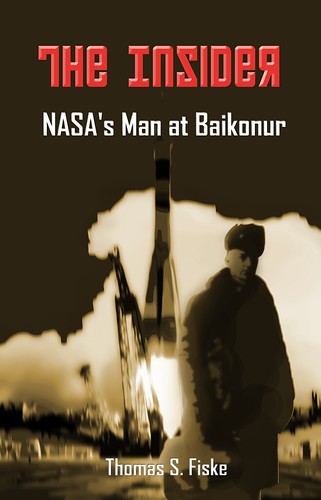
I called the book The Insider: NASA’s Man at Baikonur. It is available at the usual dot com book stores.
Showing posts with label USSR. Show all posts
Showing posts with label USSR. Show all posts
Wednesday, February 02, 2011


Monday, August 30, 2010
Unintended Consequences
Congress often passes laws that have unintended consequences. The sociologist Robert K. Merton wrote a paper about the subject as early as 1936. Some of unintended consequences are serendipitous, but others are negative or perverse. It seems that Congress has a way of introducing negative or perverse consequences.
The Smoot-Hawley Tariff Act of 1930 was designed to increase revenues for America and protect American jobs, but it almost single-handedly destroyed the world’s economy. And was it President Clinton’s administration that caused taxes to be raised on luxury boats? The result was that the poor guys who made boats were suddenly out of work.
Individuals can cause unintended consequences as well. When I began to write my book, The Insider I had no ill will against anyone. Yet, as the book is about to appear on the market, I found I have caused damage to a great American astronaut. I had no such intention.
It was in 2002 that General and astronaut Thomas Stafford produced his book, We Have Capture. It is a good book and I recommend it. The General is an American hero. Unfortunately, Stafford thought he was the first American to reach the secret Soviet launch station called Baikonur in April of 1975. He said so in his book.
General Stafford was not at all the first American to reach that space launch station. If it were not central to my book, I would have said nothing, but my book is about the guy who did get there first, and why he went there.
The Insider is about Tad Benson, MD, a space medicine scientist. President Kennedy got him to agree (through Hugh Dryden) to go to both Moscow and Baikonur to share ideas on space medicine. Oh, I know there are lots of people who said Khrushchev and Kennedy never reached an agreement on this subject, but they are wrong. Benson spent almost nine years traveling back and forth to the USSR, doing what he could to keep both cosmonauts and astronauts alive in space.
I knew Benson. He was a serious man a good friend who died too early. I checked with various agencies of the federal government to find out what he was doing during the years 1962-1971, and found that Benson had been a contractor to the NSA, CIA, NASA and other groups. I found that he also got an award from the USSR for his work.
There was a stranger on Gen Stafford’s plane to Siberia. He was on the bus when it arrived at the launch station. Stafford did not mention that Soviet scientists hugged and otherwise ganged up around the stranger, slapping him on the back and ignoring the other Americans. Tad told me about it, and the story appeared elsewhere in the Internet. Tad said that the other scientists wondered, “How did the Soviets know this guy?” but they were never told.
So I told the story in my book The Insider, with as much detail as I could. Tad was dying as he told me and we did not have a whole lot of time. I did not set out to take any of the glory that General Stafford richly deserves. But I did want to tell Tad’s story because I am one of the few in the world who knows it. And my health isn’t all that great.
The really sad part of the story about Tad and his heroic adventures is that I am not allowed to use his real name.
The Smoot-Hawley Tariff Act of 1930 was designed to increase revenues for America and protect American jobs, but it almost single-handedly destroyed the world’s economy. And was it President Clinton’s administration that caused taxes to be raised on luxury boats? The result was that the poor guys who made boats were suddenly out of work.
Individuals can cause unintended consequences as well. When I began to write my book, The Insider I had no ill will against anyone. Yet, as the book is about to appear on the market, I found I have caused damage to a great American astronaut. I had no such intention.
It was in 2002 that General and astronaut Thomas Stafford produced his book, We Have Capture. It is a good book and I recommend it. The General is an American hero. Unfortunately, Stafford thought he was the first American to reach the secret Soviet launch station called Baikonur in April of 1975. He said so in his book.
General Stafford was not at all the first American to reach that space launch station. If it were not central to my book, I would have said nothing, but my book is about the guy who did get there first, and why he went there.
The Insider is about Tad Benson, MD, a space medicine scientist. President Kennedy got him to agree (through Hugh Dryden) to go to both Moscow and Baikonur to share ideas on space medicine. Oh, I know there are lots of people who said Khrushchev and Kennedy never reached an agreement on this subject, but they are wrong. Benson spent almost nine years traveling back and forth to the USSR, doing what he could to keep both cosmonauts and astronauts alive in space.
I knew Benson. He was a serious man a good friend who died too early. I checked with various agencies of the federal government to find out what he was doing during the years 1962-1971, and found that Benson had been a contractor to the NSA, CIA, NASA and other groups. I found that he also got an award from the USSR for his work.
There was a stranger on Gen Stafford’s plane to Siberia. He was on the bus when it arrived at the launch station. Stafford did not mention that Soviet scientists hugged and otherwise ganged up around the stranger, slapping him on the back and ignoring the other Americans. Tad told me about it, and the story appeared elsewhere in the Internet. Tad said that the other scientists wondered, “How did the Soviets know this guy?” but they were never told.
So I told the story in my book The Insider, with as much detail as I could. Tad was dying as he told me and we did not have a whole lot of time. I did not set out to take any of the glory that General Stafford richly deserves. But I did want to tell Tad’s story because I am one of the few in the world who knows it. And my health isn’t all that great.
The really sad part of the story about Tad and his heroic adventures is that I am not allowed to use his real name.
Wednesday, May 26, 2010
On Producing a Book
Anybody can write a book. Producing a book is very hard. It is right up there with producing a new product for a large company such as General Electric. I have done both and I am not sure which is more difficult.
A new appliance starts with the drawings and specifications. From these you have tools made and you buy equipment that holds the tools. You design the tests and find space for the rest of the production facilities including assembly lines. You make sure pilot models work as they are made on equipment you will use in actual production. And you assure that the boxes they are sold in are made correctly, fit the product and look good.
Authors would be well-served if they had a mental image of the finished product sitting on their shelves. They need a rough idea of the plot, but must be flexible. Characters do not always do what you want them to do. So plot changes will probably occur. A new book requires front and back covers, well-edited text, pictures of acceptable quality, readable type size with the correct font. Covers do sell books, you know. Chapters must be appropriately ended. A book is in fact a list of details that must be accomplished before it can be completed. Tables of contents and indexes must be prepared. There seem to be no end of concerns for you to handle personally before the book is ready for production.
Finally, each author of a new book is an entrepreneur, trying to sell copies in the face of stiff competition from many other authors with the same idea. But if he has a good story, he will never be at rest until he has written it and has seen the book on people’s shelves.
In spite of all this, I have completed my last book. I named it The Insider. It is a novel about an American doctor who spent nine years flying into and out of the USSR during the Space Race when the US and USSR were competing with each other to be the first to land a man on the moon. President John F. Kennedy got Premier Khrushchev of the USSR to allow a NASA doctor to visit the USSR’s secret space launch site about 1963 in spite of problems in Cuba and other US-USSR conflicts. These two world leaders were looking far ahead in the space business.
All the experts say it did not happen. But it did and the man they sent was a friend. The few Government records that still exist support the NASA scientist’s story, even though most were hidden from me and any other writer. It seems that most writer-experts relied on the CIA to tell them the truth, or they relied on people in the USSR to tell them the full story. You may have noticed that books by and about Khrushchev just did not talk about the space program. It seems that the US Congress did not know about the doctor, either. If they did, they would have blabbed about him to everyone they knew. But they thought there was a serious competition and had no idea we were helping the Soviets.
But that was over forty years ago, almost fifty years now. Do you think anybody is willing to release the files on this simple doctor who helped keep Soviet cosmonauts alive? Not in this country. Perhaps one Soviet cosmonaut is still alive who might be interested in telling what he knows.
Anyway, the pain of producing The Insider is almost over. The anticipation of the joy of upsetting self-proclaimed “experts” has kept me to the task. I don’t have any more book ideas now, and this will be my tenth book, so I think I will quit.
Tuesday, March 02, 2010
The Fire Is Out
Maya Angelou, I am told, said, “There is no greater agony than bearing an untold story inside you.” I find her statement to be true. But I am running out of agony. That is, my recent book is about ready for the publisher and I have no desire to write anything else.
Once I wrote a book just for fun. It was about time travel and it was called, Time Out of Joint, a quote from one W. Shakespeare. Nothing was burning a hole in my gut until I finished that story—Maya’s agony was missing. But it came out all right.
The rest of my books, all eight or nine of them, though—they were born of agony. I knew I had to write them or be very uncomfortable the rest of my days. It was family stuff—stories about family members who died for a cause or did something unusual—those true tales pressured me into writing.
This final story is about a friend, a doctor who spent some nine years in the USSR during the space race. Through him (I call him Tad Benson), the US and the USSR shared space medicine information. President John F. Kennedy and Premier Nikita Khrushchev set up the program. But the USSR could not admit it had help from the US and the US could not admit it had helped the USSR for a variety of reasons. So, even today the story I told is universally denied.
Tad died a few years ago, an unsung hero. All his years of inventing, testing and establishing friendships in two major countries have gone down the drain. But he reached his goal and did not lose an astronaut or cosmonaut during his time of caring for them.
Tad’s story produced agony until it was written. It is called The Insider—NASA’s Man in Baikonur. Baikonur was the name of the secret Soviet rocket launch site.
Now I can rest.
When I give a talk about one of my books, there is always someone in the audience, or maybe two, who say, “I know a story about ____. But I never got around to writing it.”
My response has always been, “When it burns a hole in your gut, you’ll write that story.” That was a long time before I read Maya’s quote. But I knew, I just was certain that the burning of the gut is what drove me and very likely drives many other writers.
When people ask me, “What kinds of reviews did you get for this book?” I tell them the truth. And the truth is that I don’t care. Once the fire is out and the book is complete I can live again. I don’t read the few reviews that I get. It is too late to do anything about them because the book is finished and I am on to another project.
Well, I am through with projects. I refuse to hear about any more of them.
And finally, the fire is out.
Once I wrote a book just for fun. It was about time travel and it was called, Time Out of Joint, a quote from one W. Shakespeare. Nothing was burning a hole in my gut until I finished that story—Maya’s agony was missing. But it came out all right.
The rest of my books, all eight or nine of them, though—they were born of agony. I knew I had to write them or be very uncomfortable the rest of my days. It was family stuff—stories about family members who died for a cause or did something unusual—those true tales pressured me into writing.
This final story is about a friend, a doctor who spent some nine years in the USSR during the space race. Through him (I call him Tad Benson), the US and the USSR shared space medicine information. President John F. Kennedy and Premier Nikita Khrushchev set up the program. But the USSR could not admit it had help from the US and the US could not admit it had helped the USSR for a variety of reasons. So, even today the story I told is universally denied.
Tad died a few years ago, an unsung hero. All his years of inventing, testing and establishing friendships in two major countries have gone down the drain. But he reached his goal and did not lose an astronaut or cosmonaut during his time of caring for them.
Tad’s story produced agony until it was written. It is called The Insider—NASA’s Man in Baikonur. Baikonur was the name of the secret Soviet rocket launch site.
Now I can rest.
When I give a talk about one of my books, there is always someone in the audience, or maybe two, who say, “I know a story about ____. But I never got around to writing it.”
My response has always been, “When it burns a hole in your gut, you’ll write that story.” That was a long time before I read Maya’s quote. But I knew, I just was certain that the burning of the gut is what drove me and very likely drives many other writers.
When people ask me, “What kinds of reviews did you get for this book?” I tell them the truth. And the truth is that I don’t care. Once the fire is out and the book is complete I can live again. I don’t read the few reviews that I get. It is too late to do anything about them because the book is finished and I am on to another project.
Well, I am through with projects. I refuse to hear about any more of them.
And finally, the fire is out.
Saturday, May 09, 2009
Beating Ploughshares into Swords
It’s over. My ninth book, is on the market and I can turn to more important things, such as my tenth book. And Ham radio. And maybe, politics.
My ninth book, Ploughshares into Swords, is about WWII—how civilians and California Institute of Technology (Caltech) helped win the war. A friend of mine was also a friend of several Caltech physicists during and after the war. She supplied part of the information I used. One of her special friends was physicist Carl Anderson, who discovered anti-matter.
My friend and I were talking about scientific achievements that she knew about almost first hand. She observed that I understood what had been accomplished and that perhaps I could have kept up with these Nobel scientists had I been in their fields. I knew this wasn’t true, but I certainly wasn’t going to say so. Anyway, as I was writing about the physicists and discovered what they did as kids, I realized I had done many of the same things. But I also had become a licensed Amateur Radio (Ham) operator at an early age.

So as I wrote, I thought about being a Ham again and wondered if it were too late. I had not been licensed since 1954. In January of 2008 I took all the tests and passed them. Now Ham radio is cutting into my writing time.
Writing Ploughshares was work, but it was also fun, remembering the past and the hardships and comparing people’s attitudes then with attitudes today. I concluded that we are among a lot of dainty whiners in America.
Choosing the title from the Bible, where it talked about beating swords into ploughshares because it was a time for peace, I found of course WWII was a time for doing the opposite—taking scrap metal and forging it into guns, tanks and ammunition.
Writing Ploughshares was a trail of discovery as I learned new things about the atomic bomb, about the way that Caltech became a rocket factory and how Caltech built the China lake facility. No, I am not talking about Jet Propulsion Laboratory, either. I am talking about dry powder rockets fired from airplanes. There was enough fuel for those rockets stored around the area to blow Pasadena, CA off the map.
It is not my practice to write about the commonplace. I have no capacity or patience for it. So I wrote about secret or little-known facts that only friends of physicists at the time could know. In the process, I came to admire Caltech and its growth from rags to riches. I came to admire the practical physicists and administrators who shared a common vision and caused that growth. Now Caltech is synonymous with rocket science, cosmology and many other exotic fields. In a way I saw it happen.
While writing about world politics leading up to WWII, I had the opportunity to revisit the foreign and domestic policies of President Franklin Roosevelt. As writer with a background in economics, I found myself critiquing the seven lean years of the Roosevelt administration when he compounded the economic misery of the United States. In these days, I am seeing a new edition of the Roosevelt plan unfolding, so when I get back to writing on this web site I am very likely to comment on repeating mistakes of the past. But right now, I have to sell a few books and finish my tenth book.
“What is my tenth book about?” you ask. Well, during the Space Race with the USSR, the US had a space medicine scientist in Russia at its secret Baikonur launch site, courtesy of Premier Khrushchev (& Brezhnev). It is a deep, dark secret in both countries, but with reluctant help from NSA, CIA, NASA, and the Department of State, I am slowly putting the story together. Many “experts” have written that this did not happen, so my tenth book will be controversial. But I knew the NASA scientist who spent almost ten years going back and forth from the US to the USSR, making friends with Soviet cosmonauts and Soviet scientists, and helping them stay alive in micro-gravity conditions.
There is a great deal to write about, and the Agony of Writing continues despite adventures in a very vibrant hobby called Ham Radio.
The book? Oh, it is paperback, about 6X9 inches with around 324 pages and an index. It is for sale by Amazon and most dot com book stores. I can be Googled and so can my book.
Sincerely,
Tom, AA6TF
My ninth book, Ploughshares into Swords, is about WWII—how civilians and California Institute of Technology (Caltech) helped win the war. A friend of mine was also a friend of several Caltech physicists during and after the war. She supplied part of the information I used. One of her special friends was physicist Carl Anderson, who discovered anti-matter.
My friend and I were talking about scientific achievements that she knew about almost first hand. She observed that I understood what had been accomplished and that perhaps I could have kept up with these Nobel scientists had I been in their fields. I knew this wasn’t true, but I certainly wasn’t going to say so. Anyway, as I was writing about the physicists and discovered what they did as kids, I realized I had done many of the same things. But I also had become a licensed Amateur Radio (Ham) operator at an early age.
So as I wrote, I thought about being a Ham again and wondered if it were too late. I had not been licensed since 1954. In January of 2008 I took all the tests and passed them. Now Ham radio is cutting into my writing time.
Writing Ploughshares was work, but it was also fun, remembering the past and the hardships and comparing people’s attitudes then with attitudes today. I concluded that we are among a lot of dainty whiners in America.
Choosing the title from the Bible, where it talked about beating swords into ploughshares because it was a time for peace, I found of course WWII was a time for doing the opposite—taking scrap metal and forging it into guns, tanks and ammunition.
Writing Ploughshares was a trail of discovery as I learned new things about the atomic bomb, about the way that Caltech became a rocket factory and how Caltech built the China lake facility. No, I am not talking about Jet Propulsion Laboratory, either. I am talking about dry powder rockets fired from airplanes. There was enough fuel for those rockets stored around the area to blow Pasadena, CA off the map.
It is not my practice to write about the commonplace. I have no capacity or patience for it. So I wrote about secret or little-known facts that only friends of physicists at the time could know. In the process, I came to admire Caltech and its growth from rags to riches. I came to admire the practical physicists and administrators who shared a common vision and caused that growth. Now Caltech is synonymous with rocket science, cosmology and many other exotic fields. In a way I saw it happen.
While writing about world politics leading up to WWII, I had the opportunity to revisit the foreign and domestic policies of President Franklin Roosevelt. As writer with a background in economics, I found myself critiquing the seven lean years of the Roosevelt administration when he compounded the economic misery of the United States. In these days, I am seeing a new edition of the Roosevelt plan unfolding, so when I get back to writing on this web site I am very likely to comment on repeating mistakes of the past. But right now, I have to sell a few books and finish my tenth book.
“What is my tenth book about?” you ask. Well, during the Space Race with the USSR, the US had a space medicine scientist in Russia at its secret Baikonur launch site, courtesy of Premier Khrushchev (& Brezhnev). It is a deep, dark secret in both countries, but with reluctant help from NSA, CIA, NASA, and the Department of State, I am slowly putting the story together. Many “experts” have written that this did not happen, so my tenth book will be controversial. But I knew the NASA scientist who spent almost ten years going back and forth from the US to the USSR, making friends with Soviet cosmonauts and Soviet scientists, and helping them stay alive in micro-gravity conditions.
There is a great deal to write about, and the Agony of Writing continues despite adventures in a very vibrant hobby called Ham Radio.
The book? Oh, it is paperback, about 6X9 inches with around 324 pages and an index. It is for sale by Amazon and most dot com book stores. I can be Googled and so can my book.
Sincerely,
Tom, AA6TF
Subscribe to:
Posts (Atom)