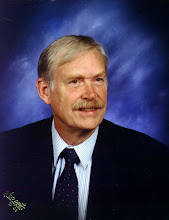
I have a son. He’s a very good painter—you know easel, brushes, canvas and the smell of turpentine—who calls his work “post impressionism.”
I, on the other hand, am more of an engineer. Actually, I have an MBA degree that was focused on economics, but I have done a lot of industrial engineering and then management in my business career. All that is proves is that a graduate of Case can do anything. I called my work “boss impressionism,” and it must have worked because I wound up as the boss of a lot of bosses and their employees.
There’s not much I can do with pencils and paper and crayons to make something pretty. I can claim an indirect contribution to art because in my retirement career I was a substitute teacher in middle schools who often conducted art classes. I was able to help students develop their art careers; some of them were talented.
For each new group of students, I had the same introduction: “I am an engineer, not an artist. Engineers draw straight lines, while artists draw curved lines. Please do not ask me how to do better work. You already do better work than I do.”
It is safe to say that my son did not inherit much art talent from me. I suspect he did not inherit the talent of organizing people, money, machines and buildings in such a way that manufacturing could take place. But I do not know. He hasn’t tried to do it.
Anyway, we have both made a contribution to society, if in very different ways. And I am very glad that he has not inherited a great deal from me as I did from my father.
My father was an electrical engineer. I definitely picked up the electrical engineering gene from Dad. Also, he appears to have had Marfan Syndrome and I inherited that from him as well.
I hope that the family Marfan stopped with me.
Health Life Art Health and wellness parents Marfan Syndrome
Thursday, July 28, 2005


Tuesday, July 26, 2005
Leveling the Jello
Few people in the world have been charged with the responsibility that I have. I am in charge of leveling the Jello at my house.
Why, you ask, is that my responsibility?
It is because I am the proprietor of the level and the shims. And it is because I have a keen eye and once worked in a refrigerator factory.
Every Fourth of July, my wife and I are invited by dear friends to their house for an Independence Day party. My wife makes a delicious desert that isn’t too fattening. It consists of Jell-o and all kinds of other goodies such as fruit, and it is made up of three layers of red, white and you guessed it, blue.
There are few refrigerators in the world whose trays are exactly level. If there are, we have never had one. It seems that when one puts a heavy glass tray on a shelf, it deflects. Thus, the first, second and third layers of Jello in my wife’s desert can never be level, because the glass tray in which they are cooled, tilts to the front. That’s where I come in.
With a practiced eye and the proper tools, I am able to insert shims under the glass tray while it is on a refrigerator shelf, so that it is almost perfectly level. And all three layers of my wife’s delicious are of the same thickness in every direction.
Well, you say, anybody can do that. And perhaps you are right, with enough practice. One of the main problems is that there is never enough room inside a refrigerator to place a level in two positions that are right angles to each other. Once you have knocked over a carton of milk, or a jar of pickles, you will understand. To make matters worse, shims are usually too long, so that once the desired even-ness is obtained, the refrigerator door will not close because the shims are in the way.
And if all other problems are overcome, the job takes too long and the refrigerator warms and food spoils.
Leveling the Jello is not a responsibility to be taken lightly.
Writing humor Food and Drink Life
Why, you ask, is that my responsibility?
It is because I am the proprietor of the level and the shims. And it is because I have a keen eye and once worked in a refrigerator factory.
Every Fourth of July, my wife and I are invited by dear friends to their house for an Independence Day party. My wife makes a delicious desert that isn’t too fattening. It consists of Jell-o and all kinds of other goodies such as fruit, and it is made up of three layers of red, white and you guessed it, blue.
There are few refrigerators in the world whose trays are exactly level. If there are, we have never had one. It seems that when one puts a heavy glass tray on a shelf, it deflects. Thus, the first, second and third layers of Jello in my wife’s desert can never be level, because the glass tray in which they are cooled, tilts to the front. That’s where I come in.
With a practiced eye and the proper tools, I am able to insert shims under the glass tray while it is on a refrigerator shelf, so that it is almost perfectly level. And all three layers of my wife’s delicious are of the same thickness in every direction.
Well, you say, anybody can do that. And perhaps you are right, with enough practice. One of the main problems is that there is never enough room inside a refrigerator to place a level in two positions that are right angles to each other. Once you have knocked over a carton of milk, or a jar of pickles, you will understand. To make matters worse, shims are usually too long, so that once the desired even-ness is obtained, the refrigerator door will not close because the shims are in the way.
And if all other problems are overcome, the job takes too long and the refrigerator warms and food spoils.
Leveling the Jello is not a responsibility to be taken lightly.
Writing humor Food and Drink Life
Thursday, July 21, 2005
Lacking Beer Skills
It was a week ago when I had to perform an arduous backyard task in the heat that I purchased a six pack of Guinness Stout at a local grocery store. I do not drink much beer or ale or stout, so I looked at the purchase as a low-risk “adventure.”
Well the time came to test my purchase. I think I had run a new sprinkler line to hibiscus plants that had never seen much water before. It was at a new house (to me) and there were many such tasks to be completed. After a fairly standard piping job that included drilling a one inch hole through a cement block wall and impaling my forearms many times on mean-looking rose bushes, I retired to the kitchen for dinner. That was when I opened the bottle of Guinness. I split the contents with my wife, who was marveling at the blood running down my forearms and wondering if I would have the strength left to clean up the kitchen.
My wife did not like the taste of the Guinness, so she did not drink more than a couple sips. I was not wild about its unusual flavor, but drank a little more than that. And I finished my dinner.
While I was cleaning up the kitchen (I did have the strength) I emptied the Guinness into the sink drain. As I did, I heart a rattle. Looking inside the bottle I discovered a strange object. It was about two inches long, light colored and rounded at the top. Wings extended from its sides that would allow it to be placed in the bottle, but would expand so that it could not leave the bottle.
Of a manufacturing mind, I decided the foreign object was part of the bottling process, and it had fallen off the equipment as the bottles were being filled or cleaned. I showed the object to my wife. She said it was probably ice and would melt after a while. I waited.
Several hours later, I checked and found the “icy” object remarkably unfazed by room temperature. I determined that I would take the six pack back to the grocer. I didn’t care about the money involved, but I wanted him to notify Mr. Guinness in Ireland that he had a process problem (provided that I wasn’t poisoned).
The next day I found myself in good health. I wrote a letter to the manager of the grocery, describing what had happened. While we could not find the receipt, I was sure he could get a lot number from the sixpack carton that records would show the bottles went to his company and his store. It is good to have these things thought out in advance.
With the sixpack in a grocery bag from the appropriate store, and the letter in my back pocket, I drove to the grocery. I really didn’t want to go. It would be easier to forget the whole thing. But I had told my wife I would take it back and that is what I had to do. I went in to see if they sold the product (it could have been another grocery company, my wife told me). But I knew it was the right store when I looked at the shelves, so I went back to my car to get the bag and its contents.
I figured I was going to help the grocer when he found out there was a product problem. He wasn’t responsible but would no doubt thank me.
It took a few minutes for the manager of the store to come to his counter and find out what I wanted.
“I got a dividend with my Guinness,” I told him as I opened the package and rattled the bottle to show that it had something in it. A crowd gathered around us.
“That’s right, he told me. It belongs in the bottle. Guinness puts it in there to increase the foam. It adds CO2.” With that, he pulled out a second bottle and rattled it. Sure enough, there was something in that bottle as well.
People in the crowd smiled and nodded wisely. I felt foolish as well as naïve as I put the bottles back in the bag. I am sure my face reddened. The letter disappeared in my back pocket.
“I am sorry,” I told the manager. “I wasted your time. I must confess that I don’t drink much of this stuff, so I didn’t know about the insert.”
“Oh, that’s all right. It’s a new development,” he tried to reassure me. But my confidence was gone. I was a failure as a beer drinker, a connoisseur and a process engineer; in addition I was a hopeless leftover from the twentieth century. And all the onlookers knew it.
Deflated, I drove back home. I was going to have to tell my wife.
Maybe I should have stuck with lemonade. I just don’t have beer skills.
Writing humor Food and Drink Life
Well the time came to test my purchase. I think I had run a new sprinkler line to hibiscus plants that had never seen much water before. It was at a new house (to me) and there were many such tasks to be completed. After a fairly standard piping job that included drilling a one inch hole through a cement block wall and impaling my forearms many times on mean-looking rose bushes, I retired to the kitchen for dinner. That was when I opened the bottle of Guinness. I split the contents with my wife, who was marveling at the blood running down my forearms and wondering if I would have the strength left to clean up the kitchen.
My wife did not like the taste of the Guinness, so she did not drink more than a couple sips. I was not wild about its unusual flavor, but drank a little more than that. And I finished my dinner.
While I was cleaning up the kitchen (I did have the strength) I emptied the Guinness into the sink drain. As I did, I heart a rattle. Looking inside the bottle I discovered a strange object. It was about two inches long, light colored and rounded at the top. Wings extended from its sides that would allow it to be placed in the bottle, but would expand so that it could not leave the bottle.
Of a manufacturing mind, I decided the foreign object was part of the bottling process, and it had fallen off the equipment as the bottles were being filled or cleaned. I showed the object to my wife. She said it was probably ice and would melt after a while. I waited.
Several hours later, I checked and found the “icy” object remarkably unfazed by room temperature. I determined that I would take the six pack back to the grocer. I didn’t care about the money involved, but I wanted him to notify Mr. Guinness in Ireland that he had a process problem (provided that I wasn’t poisoned).
The next day I found myself in good health. I wrote a letter to the manager of the grocery, describing what had happened. While we could not find the receipt, I was sure he could get a lot number from the sixpack carton that records would show the bottles went to his company and his store. It is good to have these things thought out in advance.
With the sixpack in a grocery bag from the appropriate store, and the letter in my back pocket, I drove to the grocery. I really didn’t want to go. It would be easier to forget the whole thing. But I had told my wife I would take it back and that is what I had to do. I went in to see if they sold the product (it could have been another grocery company, my wife told me). But I knew it was the right store when I looked at the shelves, so I went back to my car to get the bag and its contents.
I figured I was going to help the grocer when he found out there was a product problem. He wasn’t responsible but would no doubt thank me.
It took a few minutes for the manager of the store to come to his counter and find out what I wanted.
“I got a dividend with my Guinness,” I told him as I opened the package and rattled the bottle to show that it had something in it. A crowd gathered around us.
“That’s right, he told me. It belongs in the bottle. Guinness puts it in there to increase the foam. It adds CO2.” With that, he pulled out a second bottle and rattled it. Sure enough, there was something in that bottle as well.
People in the crowd smiled and nodded wisely. I felt foolish as well as naïve as I put the bottles back in the bag. I am sure my face reddened. The letter disappeared in my back pocket.
“I am sorry,” I told the manager. “I wasted your time. I must confess that I don’t drink much of this stuff, so I didn’t know about the insert.”
“Oh, that’s all right. It’s a new development,” he tried to reassure me. But my confidence was gone. I was a failure as a beer drinker, a connoisseur and a process engineer; in addition I was a hopeless leftover from the twentieth century. And all the onlookers knew it.
Deflated, I drove back home. I was going to have to tell my wife.
Maybe I should have stuck with lemonade. I just don’t have beer skills.
Writing humor Food and Drink Life
Saturday, July 16, 2005
Importance of Cooking Rituals
Last night I was going to be the gracious cook and provide dinner for my wife and me.
My step-son gave us his old Weber three burner barbecue several years ago. And it worked most of the time. But there were frustrating cookouts when all I got out of it was a very small flame on three burners. I always thought the tank was empty or there were spiders in the pipes. But it happened twice lately and I installed a new tank of gas in between times.
I was ready to go out an purchase a new 40 dollar regulator at Home Depot. But I decided to clean out the spiders first. And I did. As I cleaned, I read deeply in the instruction book. It was humid outside and I was in a burning, many degree sun, so I read fast.
It seems there is an anger management control (AMC) attached to the gas line that I did not know about. But I disassembled and reassembled the black, greasy machine, anyway. And then I followed the instructions for the ritual for appeasing the AMC.
It seems that for any reason at all, the machine will cut off its own gas supply. In other words the finest chef in the world is cooking at the whim and caprice of some kind of a device that shuts down and reduces the heat to a point at which the melting of butter is impossible, even on a hot day. There is a procedure one follows to convince the AMC that whatever happened, the chef was only kidding and it wouldn't happen again. Ever.
I tested the machine after I had followed the ritual and it worked.
The odd thing is, if I had purchased a new regulator for 40 dollars, I would have followed the ritual accidentally and the burners would have come on brightly, anyway.
I want to get into the regulator business right away.
Writing cooking Humor
My step-son gave us his old Weber three burner barbecue several years ago. And it worked most of the time. But there were frustrating cookouts when all I got out of it was a very small flame on three burners. I always thought the tank was empty or there were spiders in the pipes. But it happened twice lately and I installed a new tank of gas in between times.
I was ready to go out an purchase a new 40 dollar regulator at Home Depot. But I decided to clean out the spiders first. And I did. As I cleaned, I read deeply in the instruction book. It was humid outside and I was in a burning, many degree sun, so I read fast.
It seems there is an anger management control (AMC) attached to the gas line that I did not know about. But I disassembled and reassembled the black, greasy machine, anyway. And then I followed the instructions for the ritual for appeasing the AMC.
It seems that for any reason at all, the machine will cut off its own gas supply. In other words the finest chef in the world is cooking at the whim and caprice of some kind of a device that shuts down and reduces the heat to a point at which the melting of butter is impossible, even on a hot day. There is a procedure one follows to convince the AMC that whatever happened, the chef was only kidding and it wouldn't happen again. Ever.
I tested the machine after I had followed the ritual and it worked.
The odd thing is, if I had purchased a new regulator for 40 dollars, I would have followed the ritual accidentally and the burners would have come on brightly, anyway.
I want to get into the regulator business right away.
Writing cooking Humor
Tuesday, July 12, 2005
The Living Bomb
“What do ya want to do, Ali?”
I dunno. Taxes are due and my girl is mad at me, and the shark who lent me money wants it back. I didn’t get her no birthday present ‘cause I don’t got any money. What would ya do in my place?”
“Do what I been tellin’ ya for some time. Let’s blow us up. We ain’t got money for plane tickets, so let’s do it on a train instead. At rush hour, when there’s a lot of people around. We can take some of ‘em wif us. Maybe a lot.”
“Oh, I dunno, Ziad. That’s kinda final. . . .”
“Listen--Muhammed and Syed are ready for this. It wouldn’t be just us two. Together we could make a real impression on this damn place. I hate London, anyway. It would show ‘em good.”
“Maybe. How would we do it?”
“Oh, we would just put packs on our backs and set them off at a certain time, when we’re in a crowd.”
“Wouldn’t it hurt, Ali?”
“Naw, ya wouldn’t feel a thing. Besides, we we’d get all kinds of brownie points in Paradise. Maybe even all those virgins to take care of us. Think of all that sex!”
“Why don’t we just put timers in our packs and leave ‘em on the train, then?”
“Cause we don’t get paid as much if we do that, Ziad.”
“We get paid? That’s neat. Wait a minute! Do we get paid before or after the bombs go off?”
“Before, of course. Unless you want the money sent to your parents.”
“Nah. I wouldn’t give them anything. What’d they ever do for me? I want the money first. Then I would have a big night out. Lotsa girls and gin. Then I would do the dirty.”
“It ain’t dirty if it’s for Allah. Nothin’ ya do for Allah can be called dirty, Ziad.”
“That covers a lot of territory. I bet I could think of some things that . . .”
“Remember not to think. This is a time when it’s Satanic to think. It’s time to act. Remember what the Imam told us about how evil this place is? It’s up to us to strike against London. He said he wants us to do it.”
“Oh, who appointed us to be the pioneers, Ali?”
“That’s just the way it is. We’re the courageous few. If we don’t do it, no one else will. But if we take the lead, then lots of others will follow. We’re the leaders, Ziad. We can take the first strike for Allah. Maybe the people will be so upset they’ll force old Blair to pull British troops out of Iraq.”
“Yeah, Ali. If we really squash a lot of people on the trains like they did in Spain, then we could change the world.”
“Now, you’re thinkin’. I’ll get Muhammed and Syed. They’ll be ready to go tomorrow.”
“That soon?”
“Yeah. It’s all planned. We’ve been waitin’ until the big meetin’ in Scotland so we can get some attention from the press. And security’ll be focused on them, not us. We gotta do it tomorrow.”
“Can ya get me the money so we can go out tonight? I gotta have at least one big night before I leave this place.”
“This afternoon. I’ll get it to ya this afternoon, unless . . .”
“Unless what, Ali?”
“There’s only room for six of us in on this. If the other places are taken, then I guess I can’t get you the money and you’ll have to continue to live in this evil place.”
“Oh, it ain’t that bad. I guess I could take it another few months. But try, anyway. I really need a good night out. Haven’t had one in a year, since the money ran out.”
“All right, Ziad, I’ll see what I can do. But only if you’re really, really serious.”
And the next day five bombs with timers on them were placed on trains. Ziad went aboard a crowded train with a bomb in his backpack and blew himself to smithereens. Many people were killed or maimed. Two of the bombs did not go off.
Ali began his search for another living bomber.
Current events Terrorism Writing
I dunno. Taxes are due and my girl is mad at me, and the shark who lent me money wants it back. I didn’t get her no birthday present ‘cause I don’t got any money. What would ya do in my place?”
“Do what I been tellin’ ya for some time. Let’s blow us up. We ain’t got money for plane tickets, so let’s do it on a train instead. At rush hour, when there’s a lot of people around. We can take some of ‘em wif us. Maybe a lot.”
“Oh, I dunno, Ziad. That’s kinda final. . . .”
“Listen--Muhammed and Syed are ready for this. It wouldn’t be just us two. Together we could make a real impression on this damn place. I hate London, anyway. It would show ‘em good.”
“Maybe. How would we do it?”
“Oh, we would just put packs on our backs and set them off at a certain time, when we’re in a crowd.”
“Wouldn’t it hurt, Ali?”
“Naw, ya wouldn’t feel a thing. Besides, we we’d get all kinds of brownie points in Paradise. Maybe even all those virgins to take care of us. Think of all that sex!”
“Why don’t we just put timers in our packs and leave ‘em on the train, then?”
“Cause we don’t get paid as much if we do that, Ziad.”
“We get paid? That’s neat. Wait a minute! Do we get paid before or after the bombs go off?”
“Before, of course. Unless you want the money sent to your parents.”
“Nah. I wouldn’t give them anything. What’d they ever do for me? I want the money first. Then I would have a big night out. Lotsa girls and gin. Then I would do the dirty.”
“It ain’t dirty if it’s for Allah. Nothin’ ya do for Allah can be called dirty, Ziad.”
“That covers a lot of territory. I bet I could think of some things that . . .”
“Remember not to think. This is a time when it’s Satanic to think. It’s time to act. Remember what the Imam told us about how evil this place is? It’s up to us to strike against London. He said he wants us to do it.”
“Oh, who appointed us to be the pioneers, Ali?”
“That’s just the way it is. We’re the courageous few. If we don’t do it, no one else will. But if we take the lead, then lots of others will follow. We’re the leaders, Ziad. We can take the first strike for Allah. Maybe the people will be so upset they’ll force old Blair to pull British troops out of Iraq.”
“Yeah, Ali. If we really squash a lot of people on the trains like they did in Spain, then we could change the world.”
“Now, you’re thinkin’. I’ll get Muhammed and Syed. They’ll be ready to go tomorrow.”
“That soon?”
“Yeah. It’s all planned. We’ve been waitin’ until the big meetin’ in Scotland so we can get some attention from the press. And security’ll be focused on them, not us. We gotta do it tomorrow.”
“Can ya get me the money so we can go out tonight? I gotta have at least one big night before I leave this place.”
“This afternoon. I’ll get it to ya this afternoon, unless . . .”
“Unless what, Ali?”
“There’s only room for six of us in on this. If the other places are taken, then I guess I can’t get you the money and you’ll have to continue to live in this evil place.”
“Oh, it ain’t that bad. I guess I could take it another few months. But try, anyway. I really need a good night out. Haven’t had one in a year, since the money ran out.”
“All right, Ziad, I’ll see what I can do. But only if you’re really, really serious.”
And the next day five bombs with timers on them were placed on trains. Ziad went aboard a crowded train with a bomb in his backpack and blew himself to smithereens. Many people were killed or maimed. Two of the bombs did not go off.
Ali began his search for another living bomber.
Current events Terrorism Writing
Saturday, July 02, 2005
Jefferson Lives
It is that Time of Year
The time may yet come when the demand for freedom issues from Europe, Africa or Asia, rather than this country. But that time is not now. Right now freedom’s causes emanate from the United States of America. Not only are its citizens evangelistic about freedom for all people but also optimistic and hopeful that all people will someday experience freedom’s benefits.
Yes, there are the Old World Socialists among us who know better than the people of this Republic and don’t care for freedom. But they are in the minority, their strident voices muted by the whispers of freedom-lovers who in their quiet way unite to form a roar of thanksgiving. The free are grateful to those who gave so willingly of their assets and lives that freedom might exist and might even someday, become universal.
It is that time of year.
Two hundred and thirty years ago, a group of Englishmen threw down the gauntlet. They signed their own death warrants when they signed a document called the Declaration of Independence; they were determined to fight against the best army in Europe rather than take any more of the unjust behavior of the government that ruled them.
That document and subsequent events shook the world, which began to change at that moment when the ink dried. The chain of events that followed is yet causing changes nearly two and half centuries later.
Thomas Jefferson lived long and made many contributions to the welfare of mankind during his productive, somewhat flawed life. He died some fifty-one years after our war for Independence began. What did he want to be remembered for? Only one thing: Jefferson wanted to be remembered as the author of the Declaration of Independence. The rest of his accomplishments, those in government, diplomacy, science, engineering, agriculture, music, and architecture he held as unimportant, next to that document.
Jefferson knew what was really important. The Declaration of Independence has inspired millions of people since 1775, and its spirit infects people today.
While authorship of the Declaration belongs to one man, it is the reflection of the ideas and desires of a young nation. If Jefferson had not written it, perhaps another person would. It was the time when freedom was struggling to be born. Now we can take a few minutes to reflect on this wonderful gift of freedom.
It is that time of year.
Politics Conservatives Freedom Thomas Jefferson Patriotism
The time may yet come when the demand for freedom issues from Europe, Africa or Asia, rather than this country. But that time is not now. Right now freedom’s causes emanate from the United States of America. Not only are its citizens evangelistic about freedom for all people but also optimistic and hopeful that all people will someday experience freedom’s benefits.
Yes, there are the Old World Socialists among us who know better than the people of this Republic and don’t care for freedom. But they are in the minority, their strident voices muted by the whispers of freedom-lovers who in their quiet way unite to form a roar of thanksgiving. The free are grateful to those who gave so willingly of their assets and lives that freedom might exist and might even someday, become universal.
It is that time of year.
Two hundred and thirty years ago, a group of Englishmen threw down the gauntlet. They signed their own death warrants when they signed a document called the Declaration of Independence; they were determined to fight against the best army in Europe rather than take any more of the unjust behavior of the government that ruled them.
That document and subsequent events shook the world, which began to change at that moment when the ink dried. The chain of events that followed is yet causing changes nearly two and half centuries later.
Thomas Jefferson lived long and made many contributions to the welfare of mankind during his productive, somewhat flawed life. He died some fifty-one years after our war for Independence began. What did he want to be remembered for? Only one thing: Jefferson wanted to be remembered as the author of the Declaration of Independence. The rest of his accomplishments, those in government, diplomacy, science, engineering, agriculture, music, and architecture he held as unimportant, next to that document.
Jefferson knew what was really important. The Declaration of Independence has inspired millions of people since 1775, and its spirit infects people today.
While authorship of the Declaration belongs to one man, it is the reflection of the ideas and desires of a young nation. If Jefferson had not written it, perhaps another person would. It was the time when freedom was struggling to be born. Now we can take a few minutes to reflect on this wonderful gift of freedom.
It is that time of year.
Politics Conservatives Freedom Thomas Jefferson Patriotism
Tuesday, June 28, 2005
The Day the Python Pooped
Here is another story that I told seventh-grade students in science class. It is among many other stories that are found in my book, Four on the Floor.
One of our esteemed science teachers at the high school has a pet in his class room. It is a huge snake. It is a python named Monty, of course. I suppose Monty must be around twelve to fifteen feet long and he is big through the middle, at least six inches wide. That means he would wear a belt about a foot and a half long.
Years ago, Monty would stay very quiet until the bell rang, and then he would look around excitedly when a new class would come in. He was younger and smaller in those days, and the boys and girls would take him out of his cage and would pet him during class. He liked that. But now, he is too big and too strong and heavy to put back into his cage, so he seldom gets out unless his teacher takes him out for a “stroll.”
Nowadays Monty just dreams away the hours, with a kind of smile on his face as though he has just eaten a third-grader.
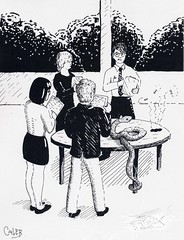
Speaking of eating, I guess you know pythons eat about once a month. And I guess you also know what else they do? That’s right. They poop once a month, too.
Well, It was my luck to have to go into Monty’s classroom the day he had pooped. I was his substitute teacher. It was a cool day and all doors and windows in the place were tightly shut. Thus, the smell from Monty’s cage was rather dreadful and it filled up every corner of the large laboratory. It would bring tears to the eyes of a strong man. There were dead bugs on the floor all around the cage where Monty’s aroma had slain them.
What else could I do? I opened all the doors and windows and turned on the fan to suck out as much of the perfume as possible. Of course, that made the room cold. When students came in, they noticed the cold. They rubbed their arms to reduce the size of their goose bumps. It didn’t take long for them to figure out what was going on.
As the boys and girls filed in, they asked if they had to sit next to Monty. I told them to find tables in the back where they would be more comfortable, and they wasted no time doing it. When class began, I checked attendance sheets and explained that Monty needed a change of underwear. But they knew that.
Then I offered to close the doors and windows if the students were too cold. They said it would be fine to leave everything as open as possible. Some of them were snacking on food they had brought into the room. From this small sample of 150 students, I scientifically concluded it was just about impossible to damage the appetites of high school students.
It was quiz day. People put their minds to their tests and forgot about the odor. After the quiz the first students to finish began to chat among themselves. In response to the noise, I held up a scoop I found in the front of the room and told them the noisiest talker would have to clean out Monty’s cage. It was very quiet after that.
Now why did I mention Monty Python and the problems he caused? It is to illustrate a point. You see, most of the science and math we deal with comes from nice, neat textbooks. Experiments have to be simple so that a teacher can get them cleaned up for the next class. Therefore, we become used to the “neatness” of textbook subjects.
But that is not the way of the real world. Real science and real math consist of “python” problems. Quite often the “python poops” in the world outside of our classrooms. This is the case where math problems are impossible to solve, where nothing comes out even, where our exploratory cave into an ancient tomb collapses, and where our experimental rats die of pneumonia when they are being tested for resistance to cancer cells.
That is the way life is. If everything went well, on the other hand, we would know all the answers that were important, and there would be no jobs for us when we graduate. The only reason jobs will be waiting for us in the future is because the “python poops” when you least expect it. Science and Math are really quite messy and unmanageable. That is the awful truth but also the fun of it.
Education Science Writing Humor kids books
One of our esteemed science teachers at the high school has a pet in his class room. It is a huge snake. It is a python named Monty, of course. I suppose Monty must be around twelve to fifteen feet long and he is big through the middle, at least six inches wide. That means he would wear a belt about a foot and a half long.
Years ago, Monty would stay very quiet until the bell rang, and then he would look around excitedly when a new class would come in. He was younger and smaller in those days, and the boys and girls would take him out of his cage and would pet him during class. He liked that. But now, he is too big and too strong and heavy to put back into his cage, so he seldom gets out unless his teacher takes him out for a “stroll.”
Nowadays Monty just dreams away the hours, with a kind of smile on his face as though he has just eaten a third-grader.
Speaking of eating, I guess you know pythons eat about once a month. And I guess you also know what else they do? That’s right. They poop once a month, too.
Well, It was my luck to have to go into Monty’s classroom the day he had pooped. I was his substitute teacher. It was a cool day and all doors and windows in the place were tightly shut. Thus, the smell from Monty’s cage was rather dreadful and it filled up every corner of the large laboratory. It would bring tears to the eyes of a strong man. There were dead bugs on the floor all around the cage where Monty’s aroma had slain them.
What else could I do? I opened all the doors and windows and turned on the fan to suck out as much of the perfume as possible. Of course, that made the room cold. When students came in, they noticed the cold. They rubbed their arms to reduce the size of their goose bumps. It didn’t take long for them to figure out what was going on.
As the boys and girls filed in, they asked if they had to sit next to Monty. I told them to find tables in the back where they would be more comfortable, and they wasted no time doing it. When class began, I checked attendance sheets and explained that Monty needed a change of underwear. But they knew that.
Then I offered to close the doors and windows if the students were too cold. They said it would be fine to leave everything as open as possible. Some of them were snacking on food they had brought into the room. From this small sample of 150 students, I scientifically concluded it was just about impossible to damage the appetites of high school students.
It was quiz day. People put their minds to their tests and forgot about the odor. After the quiz the first students to finish began to chat among themselves. In response to the noise, I held up a scoop I found in the front of the room and told them the noisiest talker would have to clean out Monty’s cage. It was very quiet after that.
Now why did I mention Monty Python and the problems he caused? It is to illustrate a point. You see, most of the science and math we deal with comes from nice, neat textbooks. Experiments have to be simple so that a teacher can get them cleaned up for the next class. Therefore, we become used to the “neatness” of textbook subjects.
But that is not the way of the real world. Real science and real math consist of “python” problems. Quite often the “python poops” in the world outside of our classrooms. This is the case where math problems are impossible to solve, where nothing comes out even, where our exploratory cave into an ancient tomb collapses, and where our experimental rats die of pneumonia when they are being tested for resistance to cancer cells.
That is the way life is. If everything went well, on the other hand, we would know all the answers that were important, and there would be no jobs for us when we graduate. The only reason jobs will be waiting for us in the future is because the “python poops” when you least expect it. Science and Math are really quite messy and unmanageable. That is the awful truth but also the fun of it.
Education Science Writing Humor kids books
Saturday, June 25, 2005
We Swim in a Sea of Dogma
Charles F. Kettering invented the first self-starting mechanism for automobiles and the first electrical ignition system, among many other important advances for cars and diesel engines. He liked to tell about how he had to drive to Detroit to go to work. He didn’t live in Detroit, but in a city in Ohio.
One day he bet a man he could get to Detroit in a relatively short time. And he won the bet. After he explained how he did it the other man exclaimed, ”Well, no wonder!” You didn’t stay on Route 25!”
Route 25 was dogma to Kettering, and he didn’t care much for dogma in driving or engineering or many other areas of life.
Dogma is a belief or doctrine held by any organization to be authoritative. Proof may or may not be available. Ostensibly, the word “dogma” belongs to religion. However, one finds dogma in many disciplines, including science. One should hesitate to think about the future of the educational scientist who hopes for tenure and does not accept the conventional scientific and political wisdom (dogma) of the scientific community.
There is a story making the rounds in the news media (as this is being written) about a graduate student in education who dared to suggest that corporal punishment of children might be useful in some cases. For this transgression against dogma he was excluded from classes in his university.
We seem to live in a sea of dogma that most do not think of as dogma at all. Here are a few examples, some of which are very dear to us but until convincing proof becomes available, are still dogma.
All men are created equal
Rape is not about sex but about power
Love conquers all
All politics is local
Behavior is organic
Matter creates itself
Illegal immigrants more than pay their way in the U.S. economy
You can't legislate morality
So it isn't just a religion that uses dogma. Many disciplines seem to be involved with dogmas to some extent for a variety of reasons. Dogma is useful for transmitting comfortable ideas from one group or individual to another. At least, on Route 25 we won't get lost.
Culture Daily Life Education Politics Science Writing conservatives
One day he bet a man he could get to Detroit in a relatively short time. And he won the bet. After he explained how he did it the other man exclaimed, ”Well, no wonder!” You didn’t stay on Route 25!”
Route 25 was dogma to Kettering, and he didn’t care much for dogma in driving or engineering or many other areas of life.
Dogma is a belief or doctrine held by any organization to be authoritative. Proof may or may not be available. Ostensibly, the word “dogma” belongs to religion. However, one finds dogma in many disciplines, including science. One should hesitate to think about the future of the educational scientist who hopes for tenure and does not accept the conventional scientific and political wisdom (dogma) of the scientific community.
There is a story making the rounds in the news media (as this is being written) about a graduate student in education who dared to suggest that corporal punishment of children might be useful in some cases. For this transgression against dogma he was excluded from classes in his university.
We seem to live in a sea of dogma that most do not think of as dogma at all. Here are a few examples, some of which are very dear to us but until convincing proof becomes available, are still dogma.
All men are created equal
Rape is not about sex but about power
Love conquers all
All politics is local
Behavior is organic
Matter creates itself
Illegal immigrants more than pay their way in the U.S. economy
You can't legislate morality
So it isn't just a religion that uses dogma. Many disciplines seem to be involved with dogmas to some extent for a variety of reasons. Dogma is useful for transmitting comfortable ideas from one group or individual to another. At least, on Route 25 we won't get lost.
Culture Daily Life Education Politics Science Writing conservatives
Thursday, June 23, 2005
Junk Government Sponsors Junk Mail
After one particularly bad day, when I pulled from my mailbox a handful of cheap advertisements and not the letter I was expecting, I decided to install a waste can next to my mailbox. My postal deliverer was a nice guy. I was going to ask him to drop all that junk mail into the waste can after he put first class mail in my mailbox. It made sense to me.
“Oh, no! We’re not allowed to do that,” the delivery man told me. “We have to put all items in your mail box, including third class mail.” Junk mail to me was third class to him. He told me I could talk to the manager of the local Post Office, if I wanted.
So I did interview the local, very courteous Postal Service manager. I didn’t get him to agree to dump third class mail, but I learned something about it.
“It is officially called third class mail,” the manager began. He just smiled when I called it junk mail (I think he secretly agreed with me). And during our discussion he also said, in effect, that the Postal Service was the force behind junk mail. It needed extra revenue, so it offered to deliver advertisements to everyone’s door for a fee less than first class rates, as long as the ads were bundled and pre-sorted. The Service was going to each house anyway, so it sought to add a few cents of revenue per house for very little cost.
The fact that hundreds of thousands of trees have to be destroyed each time a third class mailing takes place and that dumps are filling up is no concern to the Postal Service. They are in a financial bind and want more revenue.
Why is the Postal Service in a financial bind? Congress is stingy about raising mail rates. So is the public stingy with the number of first class mailings it makes. As the price of a stamp rises, so do alternate methods of sending information. The fax machine dealt the Postal Service a mean blow. Then emails have been even rougher competition. Long ago the number of private emails per year passed the number of first class mailings per year. Now, many of us are being billed electronically and we are paying our bills electronically. Another large chunk of first class mail has disappeared.
The Postal Service does not lay off its employees easily. So it is stuck with too many employees, union rules that make efficiencies difficult and declining numbers of mailings. It raises rates which result in even fewer items mailed. Thus, revenues are declining and show no indication of returning to needed levels. The future of the Postal Service looks bleak. The only useful playing card in its hand is that Congress has given it a monopoly on the handling of first class mail. It is just another example of Government being years behind in technology.
Maybe someone, somewhere, in the Postal Service will come up with an idea that will allow the Service to improve revenues and possibly break even. Until then, expect lots of junk mail. It is your government at work.
Postal Service Government environment
“Oh, no! We’re not allowed to do that,” the delivery man told me. “We have to put all items in your mail box, including third class mail.” Junk mail to me was third class to him. He told me I could talk to the manager of the local Post Office, if I wanted.
So I did interview the local, very courteous Postal Service manager. I didn’t get him to agree to dump third class mail, but I learned something about it.
“It is officially called third class mail,” the manager began. He just smiled when I called it junk mail (I think he secretly agreed with me). And during our discussion he also said, in effect, that the Postal Service was the force behind junk mail. It needed extra revenue, so it offered to deliver advertisements to everyone’s door for a fee less than first class rates, as long as the ads were bundled and pre-sorted. The Service was going to each house anyway, so it sought to add a few cents of revenue per house for very little cost.
The fact that hundreds of thousands of trees have to be destroyed each time a third class mailing takes place and that dumps are filling up is no concern to the Postal Service. They are in a financial bind and want more revenue.
Why is the Postal Service in a financial bind? Congress is stingy about raising mail rates. So is the public stingy with the number of first class mailings it makes. As the price of a stamp rises, so do alternate methods of sending information. The fax machine dealt the Postal Service a mean blow. Then emails have been even rougher competition. Long ago the number of private emails per year passed the number of first class mailings per year. Now, many of us are being billed electronically and we are paying our bills electronically. Another large chunk of first class mail has disappeared.
The Postal Service does not lay off its employees easily. So it is stuck with too many employees, union rules that make efficiencies difficult and declining numbers of mailings. It raises rates which result in even fewer items mailed. Thus, revenues are declining and show no indication of returning to needed levels. The future of the Postal Service looks bleak. The only useful playing card in its hand is that Congress has given it a monopoly on the handling of first class mail. It is just another example of Government being years behind in technology.
Maybe someone, somewhere, in the Postal Service will come up with an idea that will allow the Service to improve revenues and possibly break even. Until then, expect lots of junk mail. It is your government at work.
Postal Service Government environment
Monday, June 20, 2005
Managing Yourself So You Can Manage People
Having spent a good deal of my career as a professional manager in medium and high volume manufacturing environments, I have come to enjoy a few rough-cut management maxims that both amuse and assist people who are trying to kill themselves the way I did. I entertained students with these observations when I was a college instructor of graduates and undergraduates. That is, when there was time I could take from rattling on about the useless dogmas of management. Here are a few:
Aiming for a desirable position: Have you ever seen the important person who has all the keys on his belt? Well, you should not want to be that person. You should set your sights on being the person who points to a door and says, “Open that!”
On electronic gadgets: Pagers and telephones are nothing but leashes that your people annoyingly pull on to get your attention. You need to set up your organization and to delegate so well that you do not need those things. Also, from your viewpoint, they are forms of control. You need to let go, let people develop.
Controlling your time: A wonderful boss once told me, “Don’t try to do everything. Pick out one problem every few months and solve it. Your people will think you are omniscient.” His advice worked like a charm.
Feedback: Management gets what it inspects, not what it expects. Before you make an assignment, you should ask yourself, “How will I know when this job is done? What visible signals will be present?” Both the assignee and the assignor need to know the answers to these questions. If they do, the organization can run in a crisp, orderly fashion, provided that you openly go over the results with the assignee.
The competition: Good management is a scarce commodity. Chances are that competing companies you face have mediocre management skills. Watch these companies for problems, and capitalize when they do unbelievably stupid things.
The higher, the longer: The higher you go in an organization, the longer-term your projects should be. That is, measurement takes longer. A sweeper is low on the totem pole. You can measure his output of clean floors every hour. You can measure a maintenance person by how well his department runs in a week or month. But you may not be able to measure the output of a top manager for a year or two. His or her projects probably will take that long to come to fruition.
There are many more topics than these few, and for each topic there is a story to illustrate why it is important. That is why there are college courses to convey all this information. On this page you get just the essentials. On the other hand, you do not have to try to digest all the peripherals such as all that industrial psychology B.S. that college professors feel it important to discuss for hours on end. It isn’t of much use. A business is not a social laboratory.
Management Business psychology
Aiming for a desirable position: Have you ever seen the important person who has all the keys on his belt? Well, you should not want to be that person. You should set your sights on being the person who points to a door and says, “Open that!”
On electronic gadgets: Pagers and telephones are nothing but leashes that your people annoyingly pull on to get your attention. You need to set up your organization and to delegate so well that you do not need those things. Also, from your viewpoint, they are forms of control. You need to let go, let people develop.
Controlling your time: A wonderful boss once told me, “Don’t try to do everything. Pick out one problem every few months and solve it. Your people will think you are omniscient.” His advice worked like a charm.
Feedback: Management gets what it inspects, not what it expects. Before you make an assignment, you should ask yourself, “How will I know when this job is done? What visible signals will be present?” Both the assignee and the assignor need to know the answers to these questions. If they do, the organization can run in a crisp, orderly fashion, provided that you openly go over the results with the assignee.
The competition: Good management is a scarce commodity. Chances are that competing companies you face have mediocre management skills. Watch these companies for problems, and capitalize when they do unbelievably stupid things.
The higher, the longer: The higher you go in an organization, the longer-term your projects should be. That is, measurement takes longer. A sweeper is low on the totem pole. You can measure his output of clean floors every hour. You can measure a maintenance person by how well his department runs in a week or month. But you may not be able to measure the output of a top manager for a year or two. His or her projects probably will take that long to come to fruition.
There are many more topics than these few, and for each topic there is a story to illustrate why it is important. That is why there are college courses to convey all this information. On this page you get just the essentials. On the other hand, you do not have to try to digest all the peripherals such as all that industrial psychology B.S. that college professors feel it important to discuss for hours on end. It isn’t of much use. A business is not a social laboratory.
Management Business psychology
Friday, June 17, 2005
Boy Scoutus Horribilus
There are some very vocal people who have a deep dislike for the Boy Scouts. Their concerns seem to be based on two points. One is that they say the Scouts are religious organization, and the other is that they say Scouts are biased against gays. (Another concern for a smaller number is that the Scouts are patriotic, which is a bad attitude.)
Having been a Boy Scout in the late 1940’s an early 1950’s, I can speak with some experience about that organization. Good scholarship, fair play, personal honor, achievement in Scouting activities, “doing a good deed daily,” and “being prepared” were some of the goals of Scouts. It is hard to argue with them. They have served me well.
The Boy Scouts that I remember were, on the whole, definitely not religious. Some boys were religious, while most were not. There was a religious path that Scouts could follow that was not mandatory. But the Scouts were not anti-religious, either. “Do my duty to God and my country,” was a motto or maybe, an oath, that was a non-specific generalization which covered most religious backgrounds. It was a reflection of the statements of our nation’s founding fathers and their documents. If parents in the 1940’s and 1950’s didn’t care for the “God” stuff, they probably saw value in the rest of the program. I am sure parents of gay kids saw the value.
While gay Scoutmasters are not acceptable to the Scout program for obvious reasons, there are now and have been in the past, gay Scouts. Probably more than anyone knows.
I was a tenderfoot Scout in 1944. One by one, I saw the older boys in my troop leave for military service. Some were killed in action, some survived. They were my heroes. My association with these young men helped me in more ways than I can ever list. As I grew in Scouting, I became a leader who replaced them (reluctantly, because my ideal was Daniel Boone, a loner in the forests of Kentucky).
One of the Scouts in my patrol was very likely gay. I can still remember the day Marvin’s dad showed up with his son, asking that we include the boy in our troop. Marvin’s dad was concerned because Marvin was not “manly” enough. Marvin was a nice kid, but drew unwanted attention to himself through his sometimes strange behavior. Some of the other boys made fun of him.
Did we throw Marvin out of the troop? No, we all tried, from the Scoutmaster down to the patrol leader, to provide a supportive growth experience for Marvin and we tried to set a good example for him to follow. My job as a young leader was to make sure everyone was treated fairly, and I tried to keep pressure off this boy. I think our acceptance of Marvin helped him accept himself. I do not think Marvin changed his nature at all. But he eventually learned to conduct himself appropriately.
Conduct was always a factor for good standing in the Scouts, and if a boy had no self control, he was asked to leave. But that seldom happened. A boy may have been criticized for swearing or for cheating during games, but that was just about the extent of his discipline. We thought that good conduct leads to good citizenship.
Scouts learn all kinds of things that can lead to a responsible, self-reliant adult life. Among these things is a healthy dose of good citizenship. You don’t find that topic taught in most places, these days.
Later, I was to find through research for a book I was writing, that as our military grew from some 125,000 officers and men to over 8,000,000 during WWII, a huge number of soldiers came from two sources: the CCC (Civilian Conservation Corps) and the Boy Scouts. These young people believed in their country and in what they were doing. The Scouts were an early asset, because they were already self-reliant and used to leadership, living outdoors and first aid techniques.
When I was in boot camp in the U.S. Navy, I found that my Scout training was especially useful. There were some would-be sailors who were terrified weepers who could not handle weapons. They appeared to have no Scout training. Later in life, when I did not go along with the crowd, someone would say to me in a sneering way, “You’re too much of a Boy Scout.” I learned to smile at them and say, “Thanks to Troop Nineteen.” I am proud of my Scout training and hardly a day goes by, some sixty years later, that I do not use some part of it.
Boy Scouts writing Politics conservatives
Having been a Boy Scout in the late 1940’s an early 1950’s, I can speak with some experience about that organization. Good scholarship, fair play, personal honor, achievement in Scouting activities, “doing a good deed daily,” and “being prepared” were some of the goals of Scouts. It is hard to argue with them. They have served me well.
The Boy Scouts that I remember were, on the whole, definitely not religious. Some boys were religious, while most were not. There was a religious path that Scouts could follow that was not mandatory. But the Scouts were not anti-religious, either. “Do my duty to God and my country,” was a motto or maybe, an oath, that was a non-specific generalization which covered most religious backgrounds. It was a reflection of the statements of our nation’s founding fathers and their documents. If parents in the 1940’s and 1950’s didn’t care for the “God” stuff, they probably saw value in the rest of the program. I am sure parents of gay kids saw the value.
While gay Scoutmasters are not acceptable to the Scout program for obvious reasons, there are now and have been in the past, gay Scouts. Probably more than anyone knows.
I was a tenderfoot Scout in 1944. One by one, I saw the older boys in my troop leave for military service. Some were killed in action, some survived. They were my heroes. My association with these young men helped me in more ways than I can ever list. As I grew in Scouting, I became a leader who replaced them (reluctantly, because my ideal was Daniel Boone, a loner in the forests of Kentucky).
One of the Scouts in my patrol was very likely gay. I can still remember the day Marvin’s dad showed up with his son, asking that we include the boy in our troop. Marvin’s dad was concerned because Marvin was not “manly” enough. Marvin was a nice kid, but drew unwanted attention to himself through his sometimes strange behavior. Some of the other boys made fun of him.
Did we throw Marvin out of the troop? No, we all tried, from the Scoutmaster down to the patrol leader, to provide a supportive growth experience for Marvin and we tried to set a good example for him to follow. My job as a young leader was to make sure everyone was treated fairly, and I tried to keep pressure off this boy. I think our acceptance of Marvin helped him accept himself. I do not think Marvin changed his nature at all. But he eventually learned to conduct himself appropriately.
Conduct was always a factor for good standing in the Scouts, and if a boy had no self control, he was asked to leave. But that seldom happened. A boy may have been criticized for swearing or for cheating during games, but that was just about the extent of his discipline. We thought that good conduct leads to good citizenship.
Scouts learn all kinds of things that can lead to a responsible, self-reliant adult life. Among these things is a healthy dose of good citizenship. You don’t find that topic taught in most places, these days.
Later, I was to find through research for a book I was writing, that as our military grew from some 125,000 officers and men to over 8,000,000 during WWII, a huge number of soldiers came from two sources: the CCC (Civilian Conservation Corps) and the Boy Scouts. These young people believed in their country and in what they were doing. The Scouts were an early asset, because they were already self-reliant and used to leadership, living outdoors and first aid techniques.
When I was in boot camp in the U.S. Navy, I found that my Scout training was especially useful. There were some would-be sailors who were terrified weepers who could not handle weapons. They appeared to have no Scout training. Later in life, when I did not go along with the crowd, someone would say to me in a sneering way, “You’re too much of a Boy Scout.” I learned to smile at them and say, “Thanks to Troop Nineteen.” I am proud of my Scout training and hardly a day goes by, some sixty years later, that I do not use some part of it.
Boy Scouts writing Politics conservatives
Monday, June 13, 2005
Twenty-Nine Dimensions for the Twenty-Ninth Time
Having descended from a tribe of Edwards people, I am one who has claim on a very valuable parcel of land in the heart of New York City. The claim is real and has been in effect since the late 1700’s, but the boundary lines of the land are so vague that the claim is not enforceable. Nevertheless, every twenty-five years or so, new interest in the land claim springs up. That is, a new generation decides to get a piece of the action.
The Edwards claim is not the only generational idea I have run across lately. Psychological testing is another. A company is advertising a matchmaking business on the radio and television stations. It seems to be saying it can find a perfect mate for you. At its heart, the company is promoting a psychological test with “twenty-nine dimensions” of compatibility.
What in the world is a “dimension”? It sounds mathematical and precise, whatever it is. And this company has twenty-nine of them on one set of papers. Is there no limit to this company’s precision?
This matchmaking scam appears to be like the old hiring tests that personnel offices used to administer, or send you to psychologists so they could administer them. Come to think of it, what is the difference between hiring a new member of the firm and hiring a new husband or wife? Not much. In both cases one hopes for a long-time match.
Years ago courts made psychological companies reign their testing and promises because questions on the tests had nothing to do with the open position (what does your feeling about your father have to do with installing hood ornaments on an assembly line?). Also, the best the tests could do, was be right about 50% of the time. A savvy personnel interviewer does that well, and so does the flip of a coin.
Well, what were these tests good for? They could rule out the obvious rejects. Thanks to such testing, there are no one-legged running backs on the St. Louis Ram football team. And no blind bus drivers in Los Angeles. No doubt the twenty-nine dimensional tests will keep Beauty from marrying Jack the Ripper.
A generation has passed since psychological testing and its gee-whiz terms have faded. But now they are back, and the makers of the tests are hoping we have all forgotten why we don’t use such tests anymore.
Next, the ad men will be bringing back the image of a little dog listening to a recording device, with the title “His Master’s Voice.”
psychology Media Current Affairs management Writing
The Edwards claim is not the only generational idea I have run across lately. Psychological testing is another. A company is advertising a matchmaking business on the radio and television stations. It seems to be saying it can find a perfect mate for you. At its heart, the company is promoting a psychological test with “twenty-nine dimensions” of compatibility.
What in the world is a “dimension”? It sounds mathematical and precise, whatever it is. And this company has twenty-nine of them on one set of papers. Is there no limit to this company’s precision?
This matchmaking scam appears to be like the old hiring tests that personnel offices used to administer, or send you to psychologists so they could administer them. Come to think of it, what is the difference between hiring a new member of the firm and hiring a new husband or wife? Not much. In both cases one hopes for a long-time match.
Years ago courts made psychological companies reign their testing and promises because questions on the tests had nothing to do with the open position (what does your feeling about your father have to do with installing hood ornaments on an assembly line?). Also, the best the tests could do, was be right about 50% of the time. A savvy personnel interviewer does that well, and so does the flip of a coin.
Well, what were these tests good for? They could rule out the obvious rejects. Thanks to such testing, there are no one-legged running backs on the St. Louis Ram football team. And no blind bus drivers in Los Angeles. No doubt the twenty-nine dimensional tests will keep Beauty from marrying Jack the Ripper.
A generation has passed since psychological testing and its gee-whiz terms have faded. But now they are back, and the makers of the tests are hoping we have all forgotten why we don’t use such tests anymore.
Next, the ad men will be bringing back the image of a little dog listening to a recording device, with the title “His Master’s Voice.”
psychology Media Current Affairs management Writing
Tuesday, June 07, 2005
Choosing One's Writing Tools Carefully
It ain’t easy.
Writing a history of part of WWII is really putting together a collection of endnotes, citations, and index items. A novel is much easier. You just string chapters together. But when writing a history with MSWord, you have to become proficient in several areas.
For one thing, if you install endnotes after every chapter and then string the chapters together, the endnotes tend to flow to the last chapter, not the one they are associated with. It is hell to get them to go where they are needed, and make them stay there.
For another thing, constructing an index is not for the faint-hearted. Only the writer who has an urgent message that will save the world should attempt indexing. All others should retire in fear and trembling. Life is too short for indexing or for cheap wine.
The wonderful writer Wendell Berry once told me that a computer would not help him write any better (than he does now). It wouldn’t help him index anything he wrote, either. Now I know why he writes poetry, essays and novels exclusively. Those works require no indexes.
I know two textbook writers. So when I came to the point in my history-writing exercise where I needed to assemble my book, I consulted with them. They did use a computer but didn’t use MSWord, so they were no help. Indexing was a mystery to them as well. I suppose they hired someone to do the indexing for them. But they wanted me to tell them how I assembled the chapters and indexed the book as soon as I found out.
Now I don’t know whether to give the information to them or to sell it. I don’t want to be a salesman. I don’t want to be an MSWord technician, either. All I want to do was write.
I wonder if Wendell were understating the case? A computer might not help me to write better. In fact, computers use so much of my time that there isn’t much left for writing.
Writing Computers word Processing WWII Wendell Berry
Writing a history of part of WWII is really putting together a collection of endnotes, citations, and index items. A novel is much easier. You just string chapters together. But when writing a history with MSWord, you have to become proficient in several areas.
For one thing, if you install endnotes after every chapter and then string the chapters together, the endnotes tend to flow to the last chapter, not the one they are associated with. It is hell to get them to go where they are needed, and make them stay there.
For another thing, constructing an index is not for the faint-hearted. Only the writer who has an urgent message that will save the world should attempt indexing. All others should retire in fear and trembling. Life is too short for indexing or for cheap wine.
The wonderful writer Wendell Berry once told me that a computer would not help him write any better (than he does now). It wouldn’t help him index anything he wrote, either. Now I know why he writes poetry, essays and novels exclusively. Those works require no indexes.
I know two textbook writers. So when I came to the point in my history-writing exercise where I needed to assemble my book, I consulted with them. They did use a computer but didn’t use MSWord, so they were no help. Indexing was a mystery to them as well. I suppose they hired someone to do the indexing for them. But they wanted me to tell them how I assembled the chapters and indexed the book as soon as I found out.
Now I don’t know whether to give the information to them or to sell it. I don’t want to be a salesman. I don’t want to be an MSWord technician, either. All I want to do was write.
I wonder if Wendell were understating the case? A computer might not help me to write better. In fact, computers use so much of my time that there isn’t much left for writing.
Writing Computers word Processing WWII Wendell Berry
Friday, June 03, 2005
Homemade Kneecap Surgery
The following is a true story. It is one I told to seventh graders in public school, but it will strike a familiar chord with parents as well.
Not all the stories about my daughter Holly include a trip to the emergency room. There actually was a time when she had accidents but just plain didn’t want to see another doctor or emergency room as long as she lived. If you had had a needle in your foot, two arms and three elbows, an emergency appendectomy, eyes crossed, and your fingertips crushed off, you would also think twice about seeing more doctors. For instance, one day when Holly was in the eighth grade at Pioneer Middle School in Upland, California, she was playing softball during P.E. class. The coach saw that a certain small batter was up at bat, so he told the outfielders to play in closer. That was a bad strategy.
Holly was in left field on that bright, sunshiny day, and she crept in closer to the third baseman as the pitcher wound up for his first pitch. It was poorly thrown and barely got to the plate. “Ball One!” was the cry of the guest umpire, a girl who had been hurt at home and had an excuse from heavy-duty exercise.
The outfielders relaxed and looked around, expecting a rather slow day. Finally, the pitcher got the ball over the plate. It was a feeble strike.
On the next pitch the ball came closer to the batter. “Wham!” the bat shouted as it met the ball for the first time. The small batter, from whom everyone expected so little, had hit a hard line drive toward third.
Quick to get into the catching position, Holly leaned into the ball as if flew toward her, straight and fast. She didn’t have long to wait as the batter tossed her bat aside and headed for first base.
The speed of the ball unnerved Holly a bit as it drove right at her. Somehow she miscalculated and the ball missed her glove. It passed by her outstretched hand and bounced off her knee, heading for the centerfielder. The batter headed for second base as Holly’s teammates groaned.
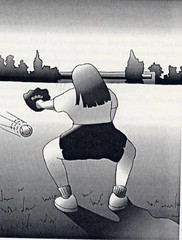
Holly also groaned. The ball had hit her on the edge of her kneecap. It transferred some of its energy to the bone before bouncing off at some thirty degrees. Holly’s kneecap suddenly found a new position almost to the side of her leg.
It hurt! A dislocated kneecap is painful. A scene flashed through Holly’s mind--of ambulances, more hospitals, more doctors, more shots and more crutches. She said to herself, “I’ve had enough!” So she took the heel of her hand and hit the edge of the dislocated kneecap bone. That did it. The force of the blow drove the kneecap back into position. It did not stop aching, but the obvious damage was gone. She tried to move her leg and it actually did what it was told!
“Maybe,’ she thought, “I won’t have to go to the hospital if I can make the leg move just enough to finish this game.”
Holly tried various moves. Some of them worked, some did not. But she grimly decided to hang on until the end of the game. She knew that if she didn’t tell anyone, she could avoid all kinds of unwanted attention from medical practitioners. So that is what she did.
Fortunately, it was not long until the game was over and it was time to dress. Holly limped off the field that day, an unsung heroine. She did not even tell her parents. It was a long time before I even heard about it.
Well, you know what I would have done. I would have been so concerned that I would have insisted that Holly go to a doctor for X-rays and so on, just to make sure she was all right. You would have done the same thing.
But Holly toughed it out.
Sometimes, you have to fight your own battles. It is a sign that you are growing up.
Education Humor kids books School Writing
Not all the stories about my daughter Holly include a trip to the emergency room. There actually was a time when she had accidents but just plain didn’t want to see another doctor or emergency room as long as she lived. If you had had a needle in your foot, two arms and three elbows, an emergency appendectomy, eyes crossed, and your fingertips crushed off, you would also think twice about seeing more doctors. For instance, one day when Holly was in the eighth grade at Pioneer Middle School in Upland, California, she was playing softball during P.E. class. The coach saw that a certain small batter was up at bat, so he told the outfielders to play in closer. That was a bad strategy.
Holly was in left field on that bright, sunshiny day, and she crept in closer to the third baseman as the pitcher wound up for his first pitch. It was poorly thrown and barely got to the plate. “Ball One!” was the cry of the guest umpire, a girl who had been hurt at home and had an excuse from heavy-duty exercise.
The outfielders relaxed and looked around, expecting a rather slow day. Finally, the pitcher got the ball over the plate. It was a feeble strike.
On the next pitch the ball came closer to the batter. “Wham!” the bat shouted as it met the ball for the first time. The small batter, from whom everyone expected so little, had hit a hard line drive toward third.
Quick to get into the catching position, Holly leaned into the ball as if flew toward her, straight and fast. She didn’t have long to wait as the batter tossed her bat aside and headed for first base.
The speed of the ball unnerved Holly a bit as it drove right at her. Somehow she miscalculated and the ball missed her glove. It passed by her outstretched hand and bounced off her knee, heading for the centerfielder. The batter headed for second base as Holly’s teammates groaned.
Holly also groaned. The ball had hit her on the edge of her kneecap. It transferred some of its energy to the bone before bouncing off at some thirty degrees. Holly’s kneecap suddenly found a new position almost to the side of her leg.
It hurt! A dislocated kneecap is painful. A scene flashed through Holly’s mind--of ambulances, more hospitals, more doctors, more shots and more crutches. She said to herself, “I’ve had enough!” So she took the heel of her hand and hit the edge of the dislocated kneecap bone. That did it. The force of the blow drove the kneecap back into position. It did not stop aching, but the obvious damage was gone. She tried to move her leg and it actually did what it was told!
“Maybe,’ she thought, “I won’t have to go to the hospital if I can make the leg move just enough to finish this game.”
Holly tried various moves. Some of them worked, some did not. But she grimly decided to hang on until the end of the game. She knew that if she didn’t tell anyone, she could avoid all kinds of unwanted attention from medical practitioners. So that is what she did.
Fortunately, it was not long until the game was over and it was time to dress. Holly limped off the field that day, an unsung heroine. She did not even tell her parents. It was a long time before I even heard about it.
Well, you know what I would have done. I would have been so concerned that I would have insisted that Holly go to a doctor for X-rays and so on, just to make sure she was all right. You would have done the same thing.
But Holly toughed it out.
Sometimes, you have to fight your own battles. It is a sign that you are growing up.
Education Humor kids books School Writing
Sunday, May 29, 2005
Dainty Americans
Having grown up not in a military family but in a family where regular Army officers were frequent visitors, I knew the name “George S. Patton” in the late 1930’s and early 1940’s. Ft. Knox was about thirty miles from my house. Then when a first cousin became Patton’s HQ Commandant at Ft. Benning, GA, I learned even more about this quintessential American hero.
One thing I learned was to respect the military. Those poor people before WWII were paid very little and were shortchanged by a stingy Congress at every turn. Yet, they persevered and stood ready to protect an ungrateful nation. Most of the men in the military were a dedicated group of soldiers.
Another thing I learned was to honor sacrifice. One by one, older boys in my Boy Scout troop disappeared into the military for active duty in other countries. They were my personal heroes. Some made it back, some did not. I didn’t say to myself, “Now, if the Military does well, the President will look good and may get more votes, so I better do some real serious fault-finding.” Such shallow people are not worthy of the sacrifices made in their names.
Finally, I learned that if I were to make an impact on my world, I needed to join up. So I joined as soon as I was eighteen. In time the Navy pointed out that while I was very qualified as an electronics technician, my feet and ankles were a bit deformed and they could no longer use my services. So they sent me home.
I always felt guilty and never lost my respect for those who wore the uniform. I was quite willing to give up my life for my country. And then one day I had a sobering thought: the Military doesn’t ask us to die for our country. It asks us to kill for our country. That is harder for some people. I often wonder if I could measure up. I happen to be a good shot and would have found out quickly if I were in the Army.
When I wrote about my cousin’s valuable and dedicated four years under the famous generals in Europe and North Africa, I came to this conclusion; on this Memorial Day of 2005, I think it is a good one:
It is the blessing of this nation that when problems arise, ordinary people step out from the backwoods and the cities to lead magnificently. This tradition of leadership began well before the Revolutionary War, and the halls of American history are covered with great names: George Washington, George Rogers Clark, Andrew Jackson, and U.S. Grant, to name a few. Marshall, Patton, Truscott and Mark Clark’s names will be displayed with these great people. And no doubt there will be many more in the years to come.
But the brave leaders of the future will not come from the ranks of those dainty Americans who want fried chicken but don’t want to kill any chickens to get such a tasty meal. No, the leaders of the future will come from the ranks of those who are willing to die for their country; but first, they are willing to kill for it. There is a huge difference.
Military Patton WWII conservatives Memorial Day
One thing I learned was to respect the military. Those poor people before WWII were paid very little and were shortchanged by a stingy Congress at every turn. Yet, they persevered and stood ready to protect an ungrateful nation. Most of the men in the military were a dedicated group of soldiers.
Another thing I learned was to honor sacrifice. One by one, older boys in my Boy Scout troop disappeared into the military for active duty in other countries. They were my personal heroes. Some made it back, some did not. I didn’t say to myself, “Now, if the Military does well, the President will look good and may get more votes, so I better do some real serious fault-finding.” Such shallow people are not worthy of the sacrifices made in their names.
Finally, I learned that if I were to make an impact on my world, I needed to join up. So I joined as soon as I was eighteen. In time the Navy pointed out that while I was very qualified as an electronics technician, my feet and ankles were a bit deformed and they could no longer use my services. So they sent me home.
I always felt guilty and never lost my respect for those who wore the uniform. I was quite willing to give up my life for my country. And then one day I had a sobering thought: the Military doesn’t ask us to die for our country. It asks us to kill for our country. That is harder for some people. I often wonder if I could measure up. I happen to be a good shot and would have found out quickly if I were in the Army.
When I wrote about my cousin’s valuable and dedicated four years under the famous generals in Europe and North Africa, I came to this conclusion; on this Memorial Day of 2005, I think it is a good one:
It is the blessing of this nation that when problems arise, ordinary people step out from the backwoods and the cities to lead magnificently. This tradition of leadership began well before the Revolutionary War, and the halls of American history are covered with great names: George Washington, George Rogers Clark, Andrew Jackson, and U.S. Grant, to name a few. Marshall, Patton, Truscott and Mark Clark’s names will be displayed with these great people. And no doubt there will be many more in the years to come.
But the brave leaders of the future will not come from the ranks of those dainty Americans who want fried chicken but don’t want to kill any chickens to get such a tasty meal. No, the leaders of the future will come from the ranks of those who are willing to die for their country; but first, they are willing to kill for it. There is a huge difference.
Military Patton WWII conservatives Memorial Day
Thursday, May 26, 2005
All I Know Is What I Read in the Newspapers
“All know is what I read in the papers,” Will Rogers told his audiences. And then he began to fill in the spaces between the lines of what he read with extremely funny analyses. It is a cinch that Will did not have access to blogs. Blog writers may have their biases but they are faster. Often you will know their biases because they will tell you, up front. But with newspapers, it is more difficult to pick out the biases.
Once, I ran across a newspaper that made clear its biases. It was the Lexington, MO, American Citizen, a newspaper that lasted from about 1855 to 1857. I was doing research on a project when I came across filmed copies of its pages.
What, you ask, was its bias? The American Citizen was devoted to telling the truth about slavery. It wanted the world (at least its small readership) to know that slavery was a good, constitutional part of American life.
While its forthrightness was commendable, the newspaper’s political goals and attachments were suspect. It wasn’t long before it was out of business and so was slavery. The Civil War determined the rest of the story.
I suspect most newspaper writers have been more economical with the truth about their goals and agendas since 1857.
If, like will Rogers, all you know is what you read in the papers, then your knowledge is a bit on the short side. Newspaper writers do not want to appear biased, while at the same time they have an agenda they want to sell the reader. Such writers are aware that newspaper readers are quite likely to vote. If they can be convinced of a particular stance, perhaps readers will vote the way the newspaper writers would like. It worked for the Lexington, MO American Citizen’s readers for a while. But then the readers found other papers and soon decided there was a better truth.
It is well established that President Lincoln, through his agent General Burnside, attacked some 200 northern newspapers that dared to print news he didn’t like. Many printing presses were totally destroyed. President Lincoln well knew that newspapers had the ability to move people, so he chose to crush those who might move people in the wrong way. He kept a stranglehold on news of his time.
But nowadays, there is too much news delivered in too many ways for a politician to control. It is probably the first time in America’s history that news cannot be controlled. The solidarity between television, radio and newspaper writers seems to have been shaken partially because foreign news media is abundantly available to Americans and partly because there have sprung up alternate sources of news within the formerly closed ranks of the old news oligarchy. Blogs are an increasingly larger part of the alternative source.
But I could be wrong. All I know is what I read in the newspapers, hear on the radio and TV, and read on the blogosphere.
Blogging News Writing American History conservatives
Once, I ran across a newspaper that made clear its biases. It was the Lexington, MO, American Citizen, a newspaper that lasted from about 1855 to 1857. I was doing research on a project when I came across filmed copies of its pages.
What, you ask, was its bias? The American Citizen was devoted to telling the truth about slavery. It wanted the world (at least its small readership) to know that slavery was a good, constitutional part of American life.
While its forthrightness was commendable, the newspaper’s political goals and attachments were suspect. It wasn’t long before it was out of business and so was slavery. The Civil War determined the rest of the story.
I suspect most newspaper writers have been more economical with the truth about their goals and agendas since 1857.
If, like will Rogers, all you know is what you read in the papers, then your knowledge is a bit on the short side. Newspaper writers do not want to appear biased, while at the same time they have an agenda they want to sell the reader. Such writers are aware that newspaper readers are quite likely to vote. If they can be convinced of a particular stance, perhaps readers will vote the way the newspaper writers would like. It worked for the Lexington, MO American Citizen’s readers for a while. But then the readers found other papers and soon decided there was a better truth.
It is well established that President Lincoln, through his agent General Burnside, attacked some 200 northern newspapers that dared to print news he didn’t like. Many printing presses were totally destroyed. President Lincoln well knew that newspapers had the ability to move people, so he chose to crush those who might move people in the wrong way. He kept a stranglehold on news of his time.
But nowadays, there is too much news delivered in too many ways for a politician to control. It is probably the first time in America’s history that news cannot be controlled. The solidarity between television, radio and newspaper writers seems to have been shaken partially because foreign news media is abundantly available to Americans and partly because there have sprung up alternate sources of news within the formerly closed ranks of the old news oligarchy. Blogs are an increasingly larger part of the alternative source.
But I could be wrong. All I know is what I read in the newspapers, hear on the radio and TV, and read on the blogosphere.
Blogging News Writing American History conservatives
Tuesday, May 24, 2005
Troubles in Cansas.
There was a story going around some years ago about the growth of information. At one time all mankind’s information was handed down orally, and the amount of it doubled every thousand years. It was stored in people’s heads. Then along came writing and scrolls. Information doubled every hundred years. We began looking for places to put this information. Libraries were invented. Indexing came later. With the advent of books and education, mankind’s information doubled every ten years, and we quickly ran out of library space. Now, with computers, mankind’s information doubles every year and there is no place to store it all, except on the Internet.
The Internet overwhelms us with information. Fortunately, it also indexes what we know, so we can avoid the uninteresting stuff and go right to the heart of whatever we are interested in. Sometimes.
My family has a letter that was written in 1856. It was written by my third great-grandfather, and it was full of folksy family information. Except for the remark that the “Cansas troubles are continuing.” I wondered why the family kept this letter. Later I found out: it was the last letter they had from him. He was murdered in Lexington, Missouri shortly after he wrote the letter and shortly after John Brown had hacked up six or seven slave owners nearby.
My ancestor, Henry Bruce Vallandingham, was part of the “Cansas troubles.” The Kansas territory was about to come into the Union as a new state, and it meant a great deal to both the North and the South whether Kansas came into the Union as a slave or free state. Henry was in the restaurant business, but it seemed he was helping to free slaves on the side. The Missouri penalty for that was death, so someone saved the State money by blowing away Henry’s stomach with a shotgun.
The l856 letter from Henry is only an example of an obvious but often overlooked factor about all the information one finds on the Internet. This information is indexed (eventually). Words like Cansas, cross-referenced with 1856, may show up during a search, and by themselves or in connection with other words, tell a story.
Yes, much of today’s blog material is useless crap right now, but maybe in tandem with other words, ideas, or blogs, it will tell an important story. The trouble is, we just do not know what is important and what is not.
But blogs may help provide some answers.
Blogging News Writing American History Kansas
The Internet overwhelms us with information. Fortunately, it also indexes what we know, so we can avoid the uninteresting stuff and go right to the heart of whatever we are interested in. Sometimes.
My family has a letter that was written in 1856. It was written by my third great-grandfather, and it was full of folksy family information. Except for the remark that the “Cansas troubles are continuing.” I wondered why the family kept this letter. Later I found out: it was the last letter they had from him. He was murdered in Lexington, Missouri shortly after he wrote the letter and shortly after John Brown had hacked up six or seven slave owners nearby.
My ancestor, Henry Bruce Vallandingham, was part of the “Cansas troubles.” The Kansas territory was about to come into the Union as a new state, and it meant a great deal to both the North and the South whether Kansas came into the Union as a slave or free state. Henry was in the restaurant business, but it seemed he was helping to free slaves on the side. The Missouri penalty for that was death, so someone saved the State money by blowing away Henry’s stomach with a shotgun.
The l856 letter from Henry is only an example of an obvious but often overlooked factor about all the information one finds on the Internet. This information is indexed (eventually). Words like Cansas, cross-referenced with 1856, may show up during a search, and by themselves or in connection with other words, tell a story.
Yes, much of today’s blog material is useless crap right now, but maybe in tandem with other words, ideas, or blogs, it will tell an important story. The trouble is, we just do not know what is important and what is not.
But blogs may help provide some answers.
Blogging News Writing American History Kansas
Sunday, May 22, 2005
Belly Button Blues
It is an ancient and honorable art—gazing at one’s navel and reporting on what one finds. Music, painting, literature and the blogosphere as well as the art of psychology contain many examples of this escapist exercise. Two hallmarks of navel-gazing come to mind. One is that the output of gazers seldom reaches classic status, and the other is that it often attracts only a small audience.
To some, the blogosphere is personal, a bit of cyberspace that should be dedicated to navel-gazing. To others, and I am one of them, the blogosphere is an opportunity to spread new ideas and new information. Frankly, lint in the navel is an old idea. It is chewing gum for the eyes.
Sure, the blogosphere may be a “voice for the voiceless,” but the voiceless may well have something new to add to the very small supply of ideas that support society’s daily struggle to survive.
Daniel Conover, a newsman in South Carolina, is using his blog to provide insight into to the news business (and sometimes to respond to general complaints about its real or imagined biases). He is also using his blog to explore new concepts and he is causing his newspaper to reach out in new ways with its own blogs.
After all, news people are in the information business, not the newspaper business.
I wish them a great deal of success, not only because they are offering a valuable service, but also because they are offering relief from belly button blues.
Blogging News Writing
To some, the blogosphere is personal, a bit of cyberspace that should be dedicated to navel-gazing. To others, and I am one of them, the blogosphere is an opportunity to spread new ideas and new information. Frankly, lint in the navel is an old idea. It is chewing gum for the eyes.
Sure, the blogosphere may be a “voice for the voiceless,” but the voiceless may well have something new to add to the very small supply of ideas that support society’s daily struggle to survive.
Daniel Conover, a newsman in South Carolina, is using his blog to provide insight into to the news business (and sometimes to respond to general complaints about its real or imagined biases). He is also using his blog to explore new concepts and he is causing his newspaper to reach out in new ways with its own blogs.
After all, news people are in the information business, not the newspaper business.
I wish them a great deal of success, not only because they are offering a valuable service, but also because they are offering relief from belly button blues.
Blogging News Writing
Friday, May 20, 2005
Reinventing Government, Son Of
It was either Mark Twain or Will Rogers who made a comment about Congressmen that had their hands in the pockets of the public. If they didn’t, they should have. It would sound more authentic coming from them than me.
Now that an irritated Democratic minority has managed to slow or stop all activity in the U. S. Senate while earnestly claiming that they are not doing so, the public can relax and take a breather, safe in the knowledge that the Senate can do no harm until the two disparate sides get together once more. From the looks of things it appears that Senators’ hands will be out of our pockets for some time to come.
It was over a hundred years ago that the House gave up its filibustering ways despite dire predictions of looming disaster. The public has been waiting and hoping for some time but the House has managed to survive anyway. And while waiting for imminent collapse, the House managed to produce an income tax and increase it on a regular basis. But perhaps the change in House rules has had a delayed topsy-turvy effect on the American public.
Seldom have voters seen a more Conservative group than the Democrats. They do not want to change a Senate rule, they do not want to alter Social Security, and they want to keep taxes at a high level. In the meantime, the Republicans, Conservatives in name only, are after many changes in Government, including the end of filibusters for judicial nominations, private accounts for Social Security, and lower taxes. There is every indication that the Republicans are planning even more changes the Democrats will resist. It is a very confusing political world, difficult for the average citizen to keep score in. But there is hope.
Since former Vice President Al Gore “reinvented Government” several years ago, one would think that these differences would have been subsumed into a system of mutual accord in which political lambs and lions could lie down together and the lambs would get lots of sleep. Yet, some eight years after the Reinvention of Government (ROG), the Senate is coming to a standstill and surely all of Government will slow with it.
There is no doubt about it. The time has come to reinvent the reinvention of Government (RROG). Mr. Gore doesn’t seem to busy these days, so perhaps he would be free to tackle the job. Some enterprising government employee will probably call the task “Son of ROG,” and we voters can rest easy, knowing an expert is on the job. (We might not rest as easily as we would when the Senate is not functioning, but we can’t expect perfection from government all the time.)
On the other hand, it is possible that RROG will obtain the same reverence that President Ford got with his WIN “Whip Inflation Now” campaign. Some voters are cynics, despite all that a sincere Congress has done to convince them otherwise.
Where are Mark Twain and Will Rogers when we need them?
Politics Government Humor Current Affairs conservatives
Now that an irritated Democratic minority has managed to slow or stop all activity in the U. S. Senate while earnestly claiming that they are not doing so, the public can relax and take a breather, safe in the knowledge that the Senate can do no harm until the two disparate sides get together once more. From the looks of things it appears that Senators’ hands will be out of our pockets for some time to come.
It was over a hundred years ago that the House gave up its filibustering ways despite dire predictions of looming disaster. The public has been waiting and hoping for some time but the House has managed to survive anyway. And while waiting for imminent collapse, the House managed to produce an income tax and increase it on a regular basis. But perhaps the change in House rules has had a delayed topsy-turvy effect on the American public.
Seldom have voters seen a more Conservative group than the Democrats. They do not want to change a Senate rule, they do not want to alter Social Security, and they want to keep taxes at a high level. In the meantime, the Republicans, Conservatives in name only, are after many changes in Government, including the end of filibusters for judicial nominations, private accounts for Social Security, and lower taxes. There is every indication that the Republicans are planning even more changes the Democrats will resist. It is a very confusing political world, difficult for the average citizen to keep score in. But there is hope.
Since former Vice President Al Gore “reinvented Government” several years ago, one would think that these differences would have been subsumed into a system of mutual accord in which political lambs and lions could lie down together and the lambs would get lots of sleep. Yet, some eight years after the Reinvention of Government (ROG), the Senate is coming to a standstill and surely all of Government will slow with it.
There is no doubt about it. The time has come to reinvent the reinvention of Government (RROG). Mr. Gore doesn’t seem to busy these days, so perhaps he would be free to tackle the job. Some enterprising government employee will probably call the task “Son of ROG,” and we voters can rest easy, knowing an expert is on the job. (We might not rest as easily as we would when the Senate is not functioning, but we can’t expect perfection from government all the time.)
On the other hand, it is possible that RROG will obtain the same reverence that President Ford got with his WIN “Whip Inflation Now” campaign. Some voters are cynics, despite all that a sincere Congress has done to convince them otherwise.
Where are Mark Twain and Will Rogers when we need them?
Politics Government Humor Current Affairs conservatives
Wednesday, May 18, 2005
George S. Patton and other Difficult Characters
There’s no doubt about it; some people are harder to write about than others. Once I wrote a small novel about the 1874 murder of my great-grandfather. It was a straightforward tale. The Klan was killing citizens and he took steps to stop them, so they killed him along with the others. Yes, he was warned, but he was brave and took a bullet anyway.
In order to spice up the story, which was factual in every other way, I introduced a young woman, the only person who did not exist in the real-life drama. Her name was Sheba Good. Sheba just about ran away with story. I spent too much time on her. Readers also took quite an interest in the girl, which took some of the edge from the outrage of crooked officials, courts and legal systems of the time.
Sheba turned out to be a rascal, an unintended handful. I still like her.
In a small history due to be out soon, I wrote about my cousin’s adventures during WWII in North Africa and Italy under Generals Patton, Clark, and Truscott. My cousin, Laban Jackson, was Headquarters Commandant for these generals and was well acquainted with them.
Of the two better-known generals, Patton was much more of a “character” than Mark W. Clark. I had more material on Clark, but Patton’s nature was overpowering. It was the same way with my cousin, as he wrote about the two men. He had several humorous stories about Patton, but none about Clark. Jackson admired both men, but he quietly favored one over the other
While I was writing, I made the mistake of driving over to San Gabriel, CA, where the Pattons went to church. That was a mistake. A life-sized statue of Patton dominated a garden area, while some of his family were buried nearby. His presence seemed to inhabit the place. I should have stayed away and maintained my neutrality.
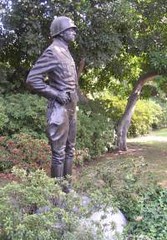
It is enough to make these observations and let readers decide what motivates people. A few decades ago it was expected that biographers would at least attempt a psychological analysis of their subjects. I don’t care for the method and have no desire to use such banal tools as “pop psychology” when I write. Most of it is junk anyway. And like most writers, I am unqualified to analyze. All I know about Patton and Clark is what the facts stated. These men’s lives needed no interpretation.
Patton, like Sheba, was a bit of a rascal. I like them both.
Patton WWII writing History
In order to spice up the story, which was factual in every other way, I introduced a young woman, the only person who did not exist in the real-life drama. Her name was Sheba Good. Sheba just about ran away with story. I spent too much time on her. Readers also took quite an interest in the girl, which took some of the edge from the outrage of crooked officials, courts and legal systems of the time.
Sheba turned out to be a rascal, an unintended handful. I still like her.
In a small history due to be out soon, I wrote about my cousin’s adventures during WWII in North Africa and Italy under Generals Patton, Clark, and Truscott. My cousin, Laban Jackson, was Headquarters Commandant for these generals and was well acquainted with them.
Of the two better-known generals, Patton was much more of a “character” than Mark W. Clark. I had more material on Clark, but Patton’s nature was overpowering. It was the same way with my cousin, as he wrote about the two men. He had several humorous stories about Patton, but none about Clark. Jackson admired both men, but he quietly favored one over the other
While I was writing, I made the mistake of driving over to San Gabriel, CA, where the Pattons went to church. That was a mistake. A life-sized statue of Patton dominated a garden area, while some of his family were buried nearby. His presence seemed to inhabit the place. I should have stayed away and maintained my neutrality.
It is enough to make these observations and let readers decide what motivates people. A few decades ago it was expected that biographers would at least attempt a psychological analysis of their subjects. I don’t care for the method and have no desire to use such banal tools as “pop psychology” when I write. Most of it is junk anyway. And like most writers, I am unqualified to analyze. All I know about Patton and Clark is what the facts stated. These men’s lives needed no interpretation.
Patton, like Sheba, was a bit of a rascal. I like them both.
Patton WWII writing History
Subscribe to:
Posts (Atom)